
How to Remove a Snake from Your Yard in South Carolina
December 24, 2025
How to Keep Squirrels Out of Your Attic in Columbia
December 24, 2025
Living in South Carolina means enjoying beautiful weather, lush greenery, and plenty of outdoor time. But our state’s natural charm also comes with its share of wildlife, including snakes. While most snakes here are harmless, some species can be dangerous to humans and pets. That’s why it’s important for homeowners to know which snakes pose a threat, how to identify them, and what to do if you encounter one on your property.
We’ve handled countless snake calls across the state. From quick removals to prevention strategies, we help homeowners stay safe and snake-free. Let’s break down the facts about snakes in South Carolina and what you should know to protect your home and family.
The Reality About Snakes in South Carolina
South Carolina is home to over 35 species of snakes, but only a small percentage are venomous. In fact, the vast majority of snakes you might see in your yard are non-venomous and play a valuable role in controlling rodents and other pests. Still, an unexpected encounter, especially if you’re not sure what species you’re looking at, can be alarming.
Venomous species in the state include copperheads, cottonmouths, and several rattlesnake varieties. These snakes have the potential to cause serious harm if they bite. That’s why learning to recognize the difference between harmless and dangerous species is so important for homeowners.
Are snakes in South Carolina dangerous
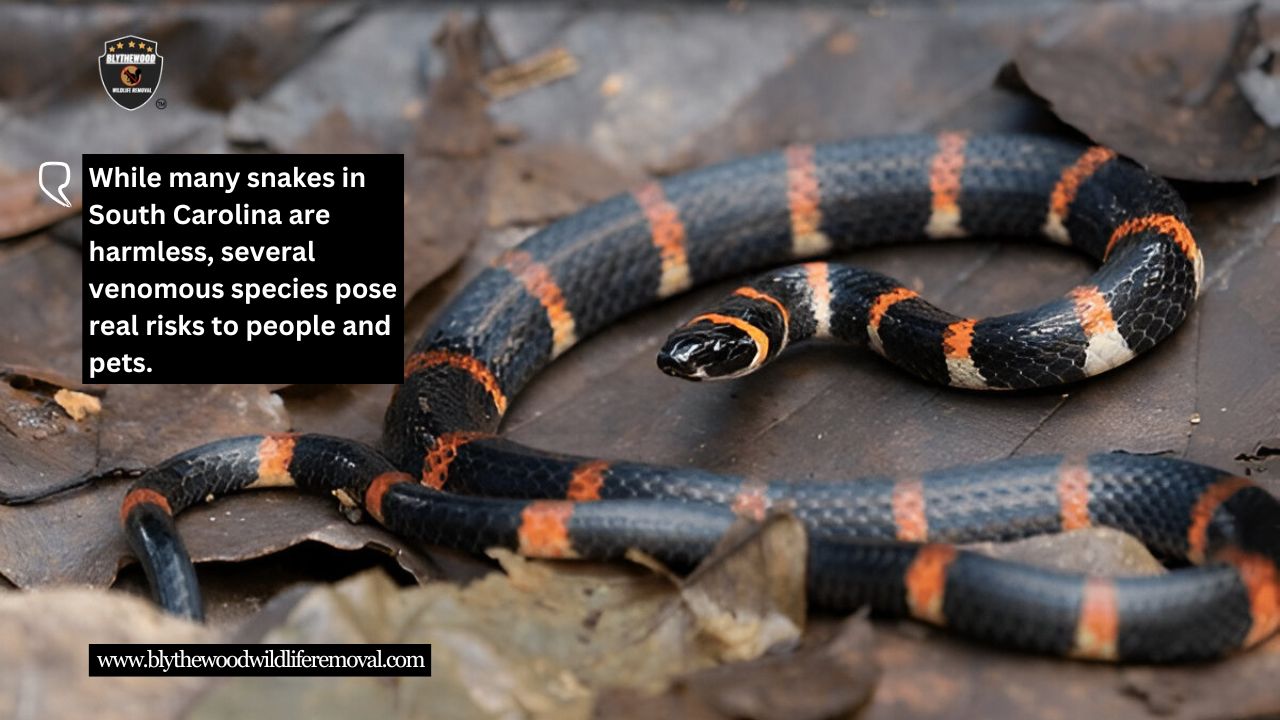
When people ask us about venomous snakes in South Carolina, they’re usually talking about venomous snakes. These species have venom that can cause severe injury or, in rare cases, be fatal if not treated promptly.
The most commonly encountered venomous snake in the state is the copperhead. Copperheads often live near wooded areas, gardens, and even suburban yards. While their venom is rarely fatal to humans, bites can be extremely painful and require medical attention.
Cottonmouths, also called water moccasins, are another species to be aware of, especially if you live near bodies of water. Their venom is more potent than a copperhead’s, and they are known for their defensive behavior. South Carolina is also home to several rattlesnake species, including the Eastern diamondback, which has one of the most dangerous bites of any snake in North America.
If you want to learn more about the species that require caution, here’s a helpful resource on venomous snakes in South Carolina.
What About Brown Snakes in South Carolina?
Not all snakes with a potentially intimidating appearance are dangerous. A good example is the brown snake. This small, shy species is non-venomous and poses no threat to people or pets. Brown snakes feed primarily on slugs and earthworms, making them more of a backyard helper than a hazard.
Still, because they can resemble young copperheads at first glance, brown snakes are often mistaken for venomous species. That’s where professional identification and removal can give you peace of mind. You can read more about brown snakes in South Carolina and why they’re not a species to fear.
Why Snakes Are Attracted to Residential Areas?
Snakes aren’t seeking out humans; they’re looking for food, shelter, and warmth. If your yard has tall grass, woodpiles, rock borders, or overgrown shrubs, you’re providing the kind of hiding spots they love. Add in a rodent problem, and your property becomes an ideal hunting ground.
In cooler months, snakes may seek shelter under porches, inside sheds, or even in crawl spaces. Warmer months bring more movement as they search for food and mates, increasing the chances of seeing one in your yard.
The Risks to Homeowners and Pets
While the majority of South Carolina snakes are harmless, the presence of venomous species means you should treat every unknown snake encounter with caution. For humans, a venomous snake bite can lead to swelling, tissue damage, and systemic symptoms that require immediate medical care. Pets, especially curious dogs, are also at high risk since they’re more likely to approach and provoke a snake.
Even non-venomous snakes can pose indirect hazards. A startled snake might bite defensively, and while the bite won’t inject venom, it can still be painful and may require medical attention to prevent infection.
What to Do If You Encounter a Snake?
If you see a snake on your property, the safest approach is to keep your distance. Don’t try to catch it or scare it away; this increases the risk of a defensive strike. Keep pets and children indoors, and call Blythewood Wildlife Removal at 1-803-760-9166 immediately.
We can quickly identify the species, safely remove it, and assess your property for conditions that might attract more snakes. Our process is humane, legal, and designed to keep both you and the snake safe.
Preventing Future Snake Encounters
The best way to avoid dangerous snake encounters is prevention. Our team can help you develop a plan to make your yard less appealing to snakes. This may include:
- Keeping grass short and landscaping tidy
- Removing woodpiles, debris, and unused equipment
- Securing outdoor pet food to avoid attracting rodents
- Installing barriers in high-risk areas like under decks or sheds
By making your property less inviting, you greatly reduce the chance of snakes showing up in the first place.
At Blythewood Wildlife Removal, we’re here to give you back peace of mind. Whether you’ve spotted a suspicious snake or want to take proactive steps to prevent encounters, we’ve got the knowledge, tools, and local experience to help.
Don’t take risks with your safety. Contact us today through our homepage and let us make your yard safe, secure, and snake-free.
- How to Tell if Bats Are Living in Your Attic in South Carolina - December 24, 2025
- Removing Raccoons Safely From the Attic in South Carolina - December 24, 2025
- How to Keep Squirrels Out of Your Attic in Columbia - December 24, 2025