How to Get Rid of Animals Under the House in South Carolina?
July 22, 2025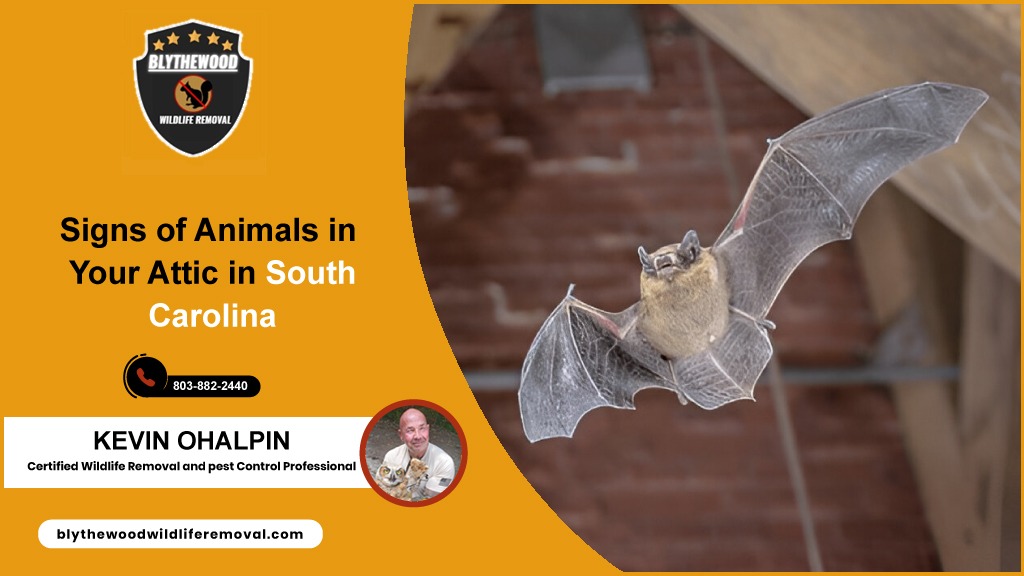
How to Identify Signs of Animals in Your Attic in South Carolina?
August 18, 2025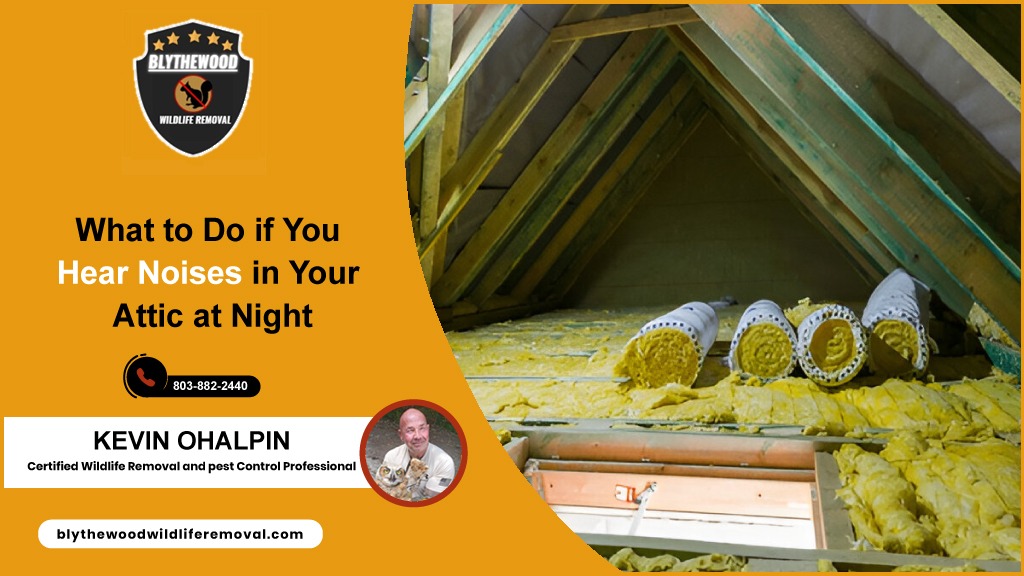
Hearing strange noises in your attic during the night can be unsettling, especially if you’re not sure what’s causing them. Whether you’re dealing with a faint scratching sound, scurrying footsteps, or even loud thumps, it’s crucial to address the situation promptly. At Blythewood Wildlife Removal, we understand how distressing these sounds can be, and we’re here to help you identify and solve the problem effectively. In this article, we’ll walk you through some possible causes of attic noises and explain what steps you should take to address them.
Common Causes of Noises in Your Attic
There are several potential reasons why you might hear noises in your attic at night. Most commonly, animals like raccoons, squirrels, and rodents make their way into attics in search of shelter, food, and warmth. These creatures are nocturnal, meaning they are most active during the night, which explains why you may only notice the sounds when the house is quiet. Here are some of the most common animals that could be causing the sounds in your attic:
Raccoons:
Known for their front paws, raccoons can easily climb into attics through small openings or damaged vents. Once inside, they may make noises as they explore or build nests. Raccoons are often loud when they are moving around, and you may hear scraping, scurrying, or even vocalizations.
Squirrels:
Squirrels are excellent climbers, and they are notorious for chewing on wood, insulation, and wires. Their high-pitched scurrying noises can often be heard as they move around the attic in search of food or a nesting place.
Rats and Mice:
These rodents are known for being highly active at night. You may hear scratching, gnawing, or scurrying noises as rats or mice move across beams or insulation in the attic. Their sharp teeth also cause damage to the structure as they chew through wood or wires.
Snakes:
Though not as common as other pests, snakes can find their way into attics through gaps in the walls or roof. Snakes are often silent, but you may hear a rustling or slithering noise as they move through the attic.
While these animals may seem harmless at first, they can quickly become a serious problem. Once inside your attic, these pests can damage your insulation, electrical wires, and even the structure of your home. Worse still, they can pose a health risk by carrying diseases or parasites like fleas and ticks.
Steps to Take If You Hear Noises in Your Attic
Listen Carefully to the Noises
Try to identify the type of noise you’re hearing. The sound of a scurrying mouse or rat is different from that of a raccoon moving around. Raccoons are larger and make more pronounced noises, while squirrels are often heard scratching at walls. Snakes are more likely to produce a rustling sound. Identifying the animal making the noise will help our team determine the best course of action.
Inspect Your Home for Entry Points
Once you’ve identified the noise, the next step is to look for possible entry points. Wildlife typically gains access to attics through gaps in the roof, vents, chimneys, or openings around windows and doors. Make sure to check your attic, roofline, and other vulnerable areas for holes or cracks. If you find an entry point, it’s essential to address it as soon as possible to prevent other animals from entering.
Seal Off Entry Points
After safely removing the animals, it’s crucial to seal up any entry points to prevent future infestations. Our team will not only remove the animals but also provide expert recommendations for fortifying your home’s exterior to ensure that wildlife can’t return. This may involve sealing cracks, installing mesh screens over vents, or repairing gaps in the roof.
Call a Professional Wildlife Removal Service
If you’re unsure about the source of the noise or how to handle the situation, it’s best to call a professional wildlife removal service. We have years of experience dealing with a wide range of wildlife infestations. Our trained technicians can inspect your attic, identify the source of the problem, and develop a customized plan for removal. We offer raccoon removal, squirrel control, rodent management, snake removal services, and much more in Columbia, SC.
Why It’s Important to Address Attic Noises Quickly
It’s essential to act quickly when you hear noises in your attic. These pests can cause substantial damage to your home. If left unchecked, they can chew through electrical wires, increasing the risk of fire. They can also contaminate your attic with droppings, urine, and nesting materials, creating unsanitary conditions. Additionally, rodents and raccoons are notorious for spreading diseases, including leptospirosis, hantavirus, and rabies.
If you’re experiencing noises in your attic, it’s crucial not to ignore them. Even if the sounds seem occasional, it’s a good idea to have a professional wildlife removal service inspect the area. We specialize in the safe and humane removal of wildlife from attics, including raccoon removal, squirrel control, bat removal, and snake relocation.
Why Choose Blythewood Wildlife Removal?
At Blythewood Wildlife Removal, we’re committed to providing comprehensive wildlife removal services for Columbia, SC, and the surrounding areas. We understand how stressful it can be to deal with unwanted animals in your attic, and we are dedicated to providing fast, effective solutions. Our team is fully licensed and insured, and we take pride in offering humane, eco-friendly methods for removing wildlife.
Whether you’re dealing with raccoons, squirrels, rodents, or snakes, we are equipped to handle them all. Our experienced technicians use the latest tools and techniques to safely remove wildlife and prevent future infestations. Contact us today at 1-803-760-9166 to schedule an inspection.
- How to Tell if Bats Are Living in Your Attic in South Carolina - December 24, 2025
- Removing Raccoons Safely From the Attic in South Carolina - December 24, 2025
- How to Keep Squirrels Out of Your Attic in Columbia - December 24, 2025