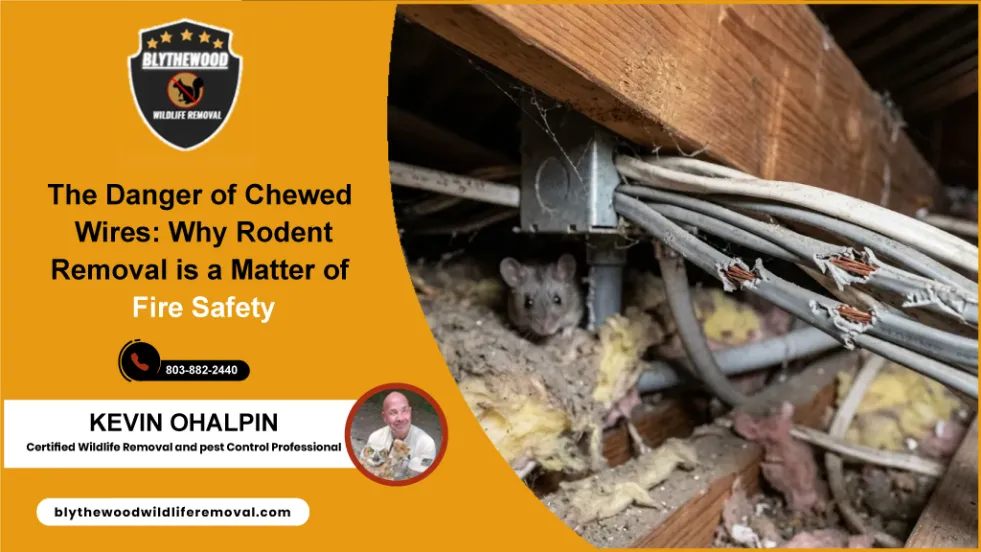
The Danger of Chewed Wires: Why Rodent Removal is a Matter of Fire Safety
April 20, 2026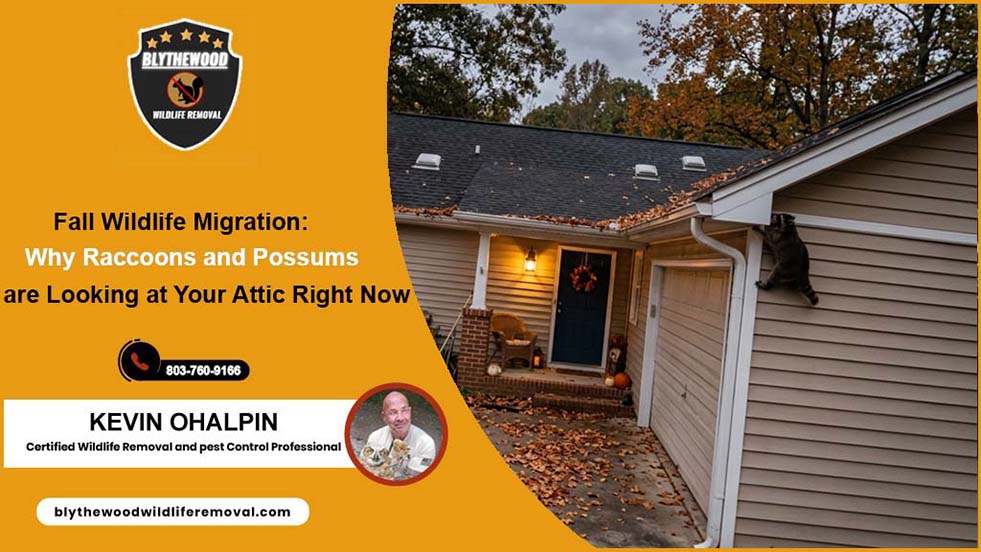
Fall Wildlife Migration: Why Raccoons and Possums are Looking at Your Attic Right Now
May 22, 2026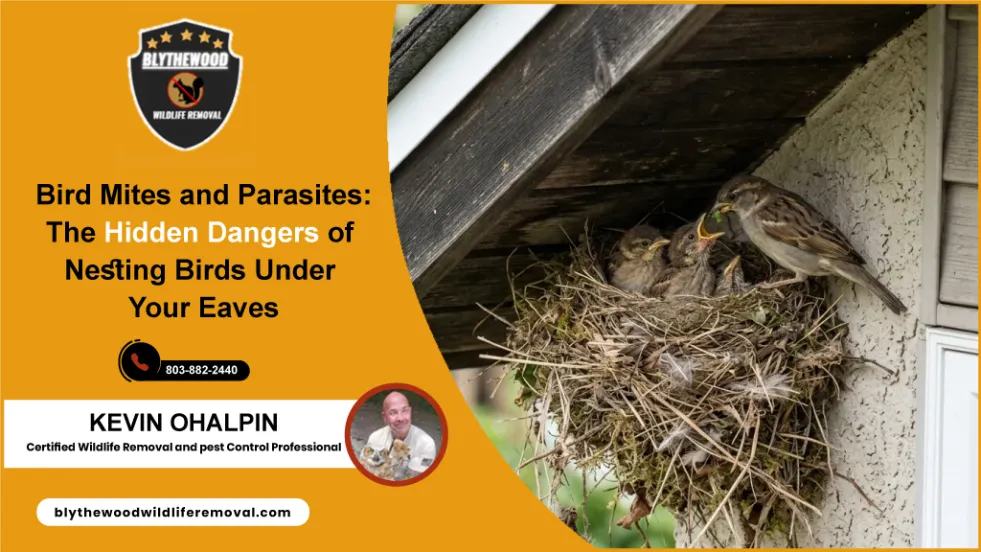
Birds nesting around your home might not seem like a big deal at first. In fact, many homeowners in Columbia, SC, ignore it completely, especially when nests are tucked under roof eaves or near vents where they are not easily visible. The problem starts once those nests are no longer active.
What many people do not realize is that birds often bring parasites with them. And when the birds leave, those parasites do not go with them. They stay behind and start looking for a new host. That is where the real issue begins.
At Blythewood Wildlife Removal, this is a situation we see more often than expected. Homeowners call about itching, unexplained bites, or tiny bugs inside the house, only to find out the source is an old bird nest attached to the structure.
Why Birds Nest Under Eaves in Columbia Homes
Eaves and roof overhangs provide ideal nesting spots. They offer shelter from rain, protection from predators, and a stable place to raise young.
In areas around Columbia, such as Rosewood or Irmo, homes with open rooflines or exposed edges are especially attractive to birds.
Once a pair builds a nest, they may return season after season if the space is not blocked off.
While the nesting itself may seem harmless, the conditions it creates can lead to hidden problems inside and around the home.
What Are Bird Mites and Why Are They a Problem
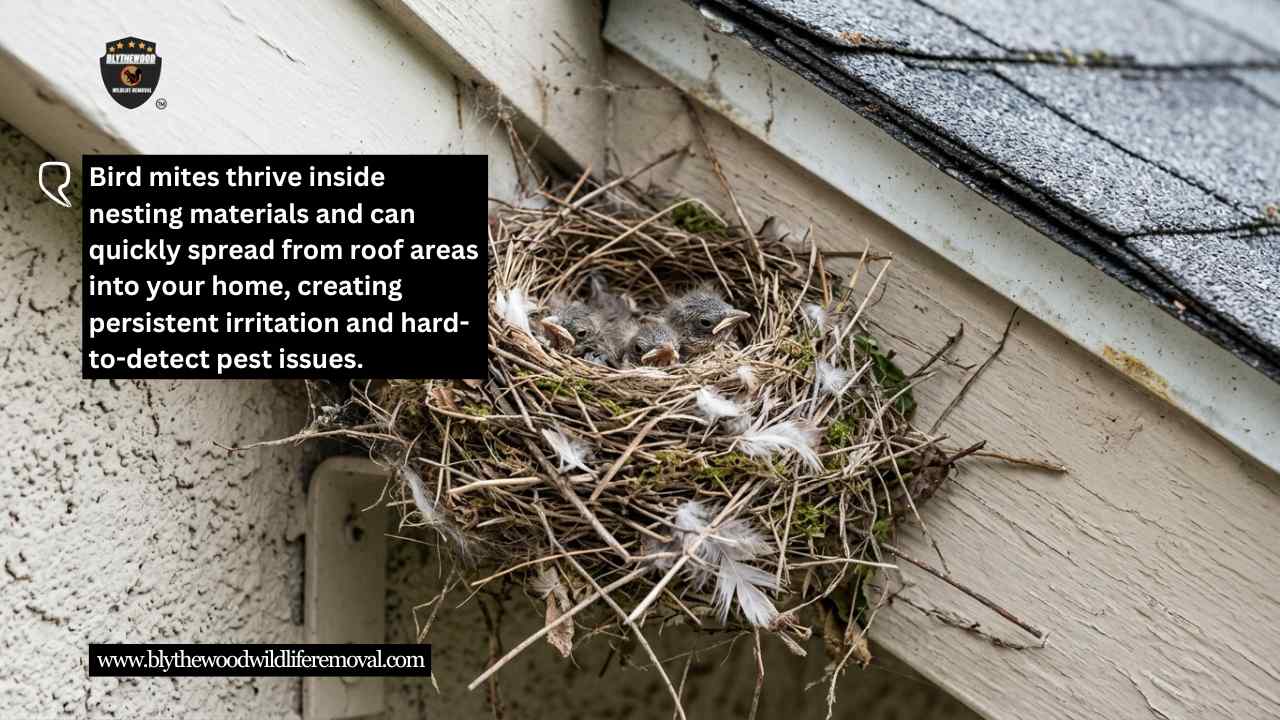
Bird mites are tiny insects that feed on the blood of birds. They usually stay within the nest while birds are present. But once the birds leave, mites begin to spread.
Without their natural host, they move into nearby areas, including attics, soffits, vents, and even inside living spaces. In some cases, they enter through small cracks or gaps near the nesting site.
Homeowners often describe them as tiny crawling specks that appear suddenly on walls, ceilings, or furniture.
They do bite humans, and while they do not live on people long-term, their presence can cause irritation, discomfort, and ongoing stress.
How Bird Nesting Leads to Indoor Infestations
The issue is not just the nest itself. It is what builds up over time. Feathers, droppings, and organic debris create an environment where mites and other parasites thrive. When the nest is abandoned or disturbed, these pests spread out in search of food.
This is why many homeowners start noticing problems after birds leave, not while they are still present.
If you have had recent bird activity, it is important to consider a bird nest removal service in Columbia before the situation turns into an indoor pest issue.
Signs You May Have Bird Mites in Your Home
This problem can be easy to miss at first. The signs are subtle but become more noticeable over time.
- Unexplained itching or bites, especially near ceilings or upper walls
- Tiny moving dots on surfaces, often mistaken for dust
- Activity near vents, windows, or attic access points
- Recent bird nesting around the roof edges or eaves
If these signs appear together, there is a strong chance the source is related to nesting birds.
Homes near green spaces like Riverbanks Zoo and Garden or wooded residential areas tend to see this more often due to higher bird activity.
Why Removing the Nest Is Only Part of the Solution
Many homeowners try to remove visible nests on their own. While that may seem like it solves the issue, it often makes things worse.
Disturbing the nest can cause mites to spread faster.
The real solution involves removing the nesting material safely, cleaning the affected area, and addressing any entry points that allowed birds to nest there in the first place.
This is where professional wildlife removal in Columbia becomes important. It is not just about removing birds, but about preventing the problem from returning.
Other Risks of Birds Nesting on Your Home
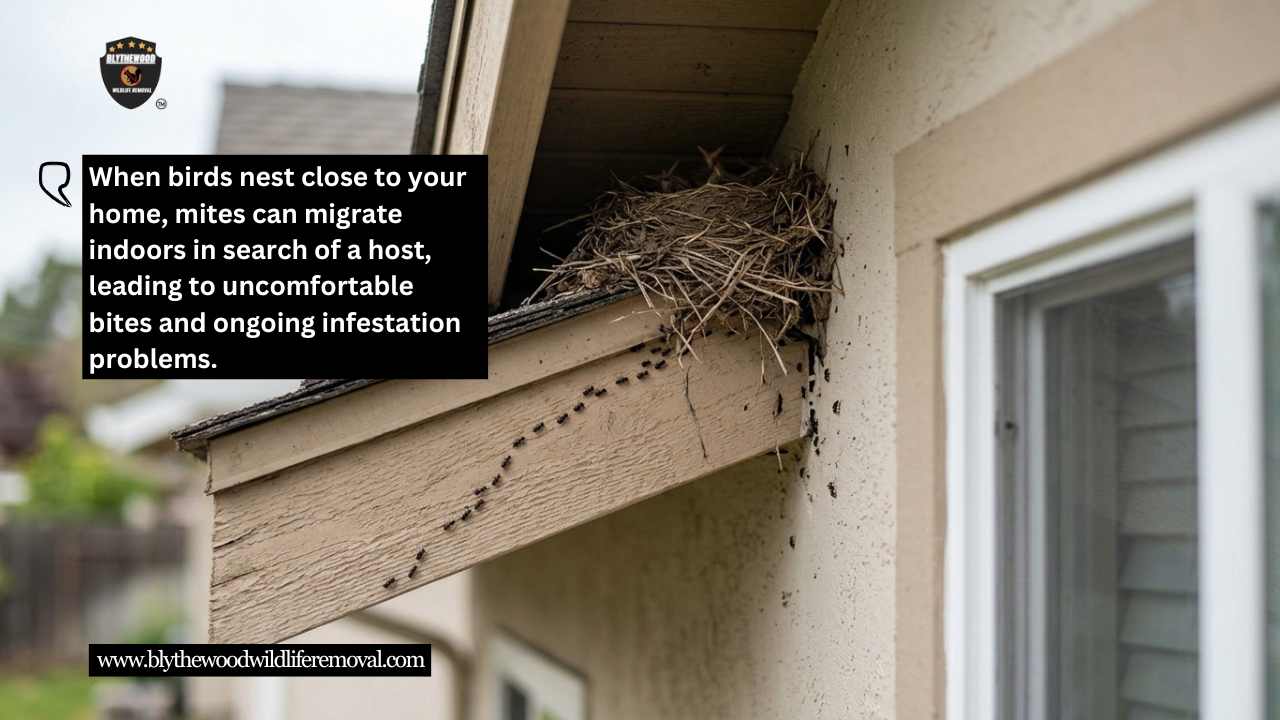
Bird mites are not the only concern. Nesting birds can also block vents, which affects airflow and moisture control. Droppings can damage surfaces and create sanitation issues. In some cases, birds may even carry additional parasites or bacteria.
Over time, these issues can affect both the structure of your home and indoor air quality.
This is why services like attic cleanup and sanitation, along with wildlife exclusion services, are often recommended after bird removal.
Bird and Wildlife Removal Help in Columbia, SC
If you have noticed birds nesting under your eaves or signs of mites inside your home, it is important to act early. What starts as a small nesting issue can quickly turn into a larger infestation if left untreated.
Professional wildlife removal focuses on safely removing nests, addressing parasite activity, and sealing off areas where birds can return. It also helps identify any hidden damage or contamination caused by long-term nesting.
Contact Blythewood Wildlife Removal
Business Name: Blythewood Wildlife Removal, Columbia, SC
Address: 1314 Lincoln St, Columbia, SC 29201
Phone: 803-760-9166
Email: [email protected]
Same-day inspection and wildlife removal services are available across Columbia, SC, and nearby areas.
How to Prevent Birds From Nesting Under Eaves
Prevention is the best long-term solution.
- Close off small gaps or openings near the roof edges
- Install proper vent covers
- Remove old nests before new ones are built
- Schedule inspections during peak nesting seasons
Taking these steps can reduce the chances of repeat issues and help keep your home protected year-round.
Final Thoughts
Birds nesting under your eaves may not seem like a serious problem at first. But what comes with them often is.
Bird mites and parasites can spread quickly once a nest is abandoned, leading to discomfort and unexpected indoor issues.
For homeowners in Columbia, SC, the key is early action. Identifying the problem, removing nests properly, and preventing future nesting can save time, stress, and ongoing pest problems.
FAQs
Can bird mites live on humans?
Bird mites can bite humans, but they do not live on people permanently. However, they can cause irritation and continue biting until the source is removed.
How do bird mites get inside the house?
They usually enter through small gaps near the nesting site, such as vents, soffits, or cracks around rooflines.
Are bird nests dangerous for homes?
Yes, if not taken care of, they can lead to parasite infestations, blocked vents, and contamination from droppings and debris.
Should I remove a bird nest myself?
It is not recommended, especially if mites are present. Disturbing the nest can spread parasites further inside the home.
What is the best way to get rid of bird mites?
The most effective approach is removing the nest, cleaning the area, and treating affected spaces while sealing entry points.
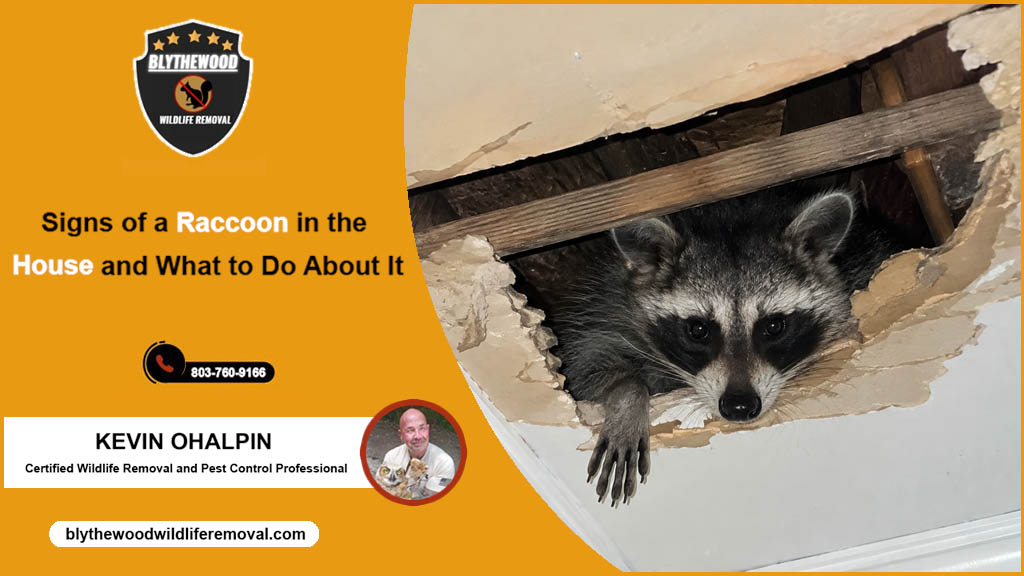
- Signs of a Raccoon in the House and What to Do About It - September 16, 2026
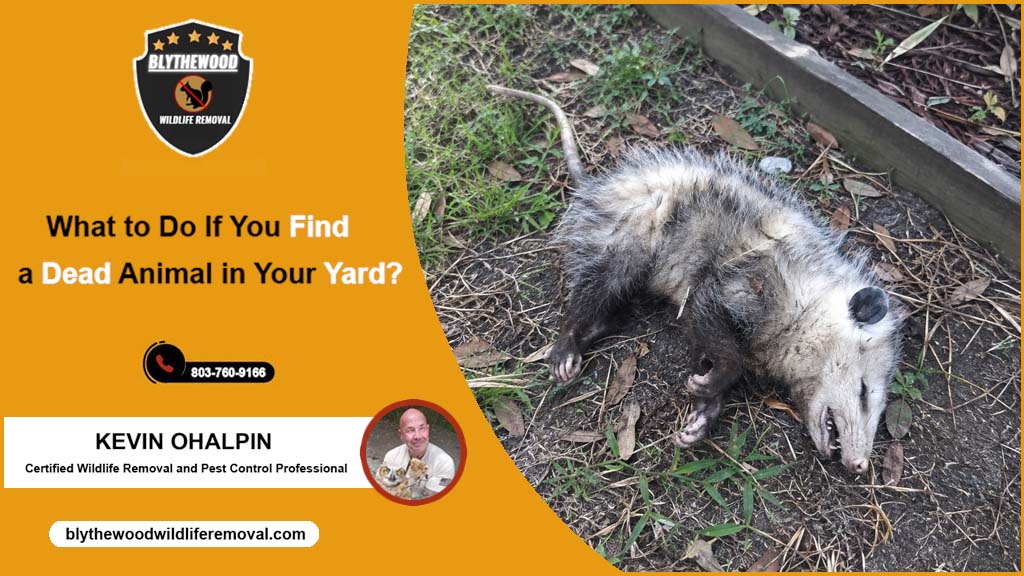
- What to Do If You Find a Dead Animal in Your Yard? - September 16, 2026
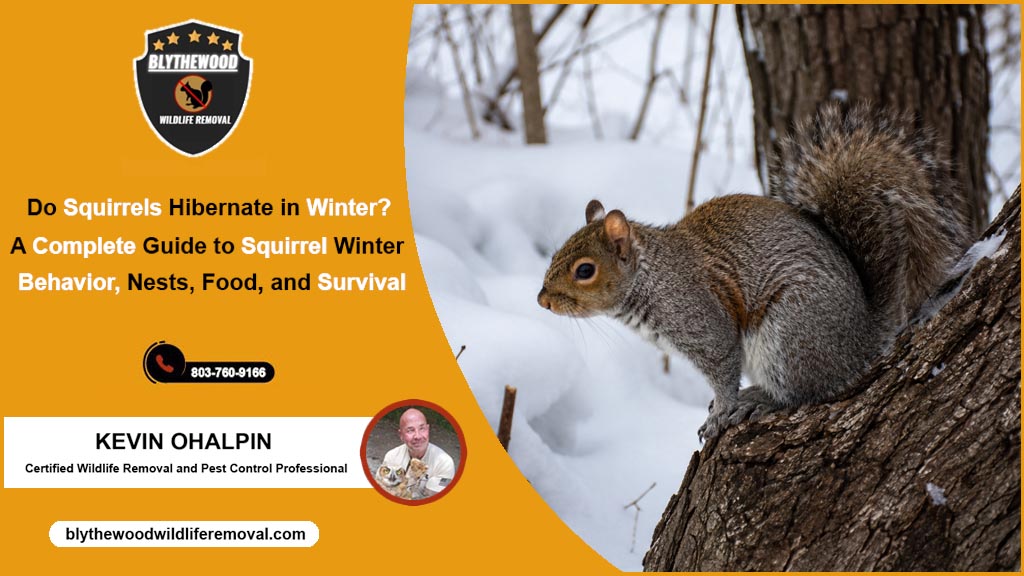
- Do Squirrels Hibernate in Winter? A Complete Guide to Squirrel Winter Behavior, Nests, Food, and Survival - September 16, 2026