How Wildlife Problems Affect Property Value and Home Sales
June 24, 2026
How to Keep Opossums Out of Your Yard Before They Move In
July 27, 2026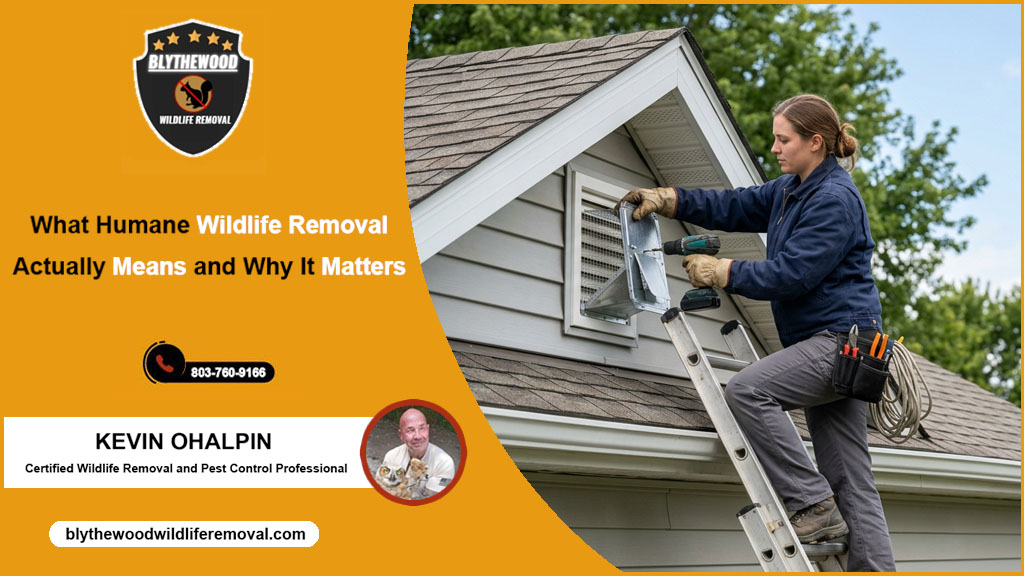
The word “humane” shows up on almost every wildlife removal company’s website. It’s become so common that most homeowners scroll past it without thinking twice. But it actually means something specific, and understanding what it means helps you make a better hiring decision and sets realistic expectations for how the job gets done.
Humane wildlife removal isn’t just about being kind to animals. It’s a method-driven approach that tends to produce more thorough, longer-lasting results than the alternatives. Here’s what it involves in practice.
What Humane Removal Actually Means
At its core, humane wildlife removal means resolving an animal conflict without causing unnecessary harm. That translates to a few specific practices.
Live trapping is used instead of kill traps wherever possible. The animal is captured, relocated to a suitable habitat away from your property, and released. No poison. No lethal devices inside walls or attics where an animal can die and create a secondary odor and contamination problem.
Exclusion is the preferred method for species like bats and squirrels. One-way devices allow animals to exit a structure naturally and prevent re-entry without any direct handling of the animal at all. It’s effective, low-stress for the animal, and produces clean results.
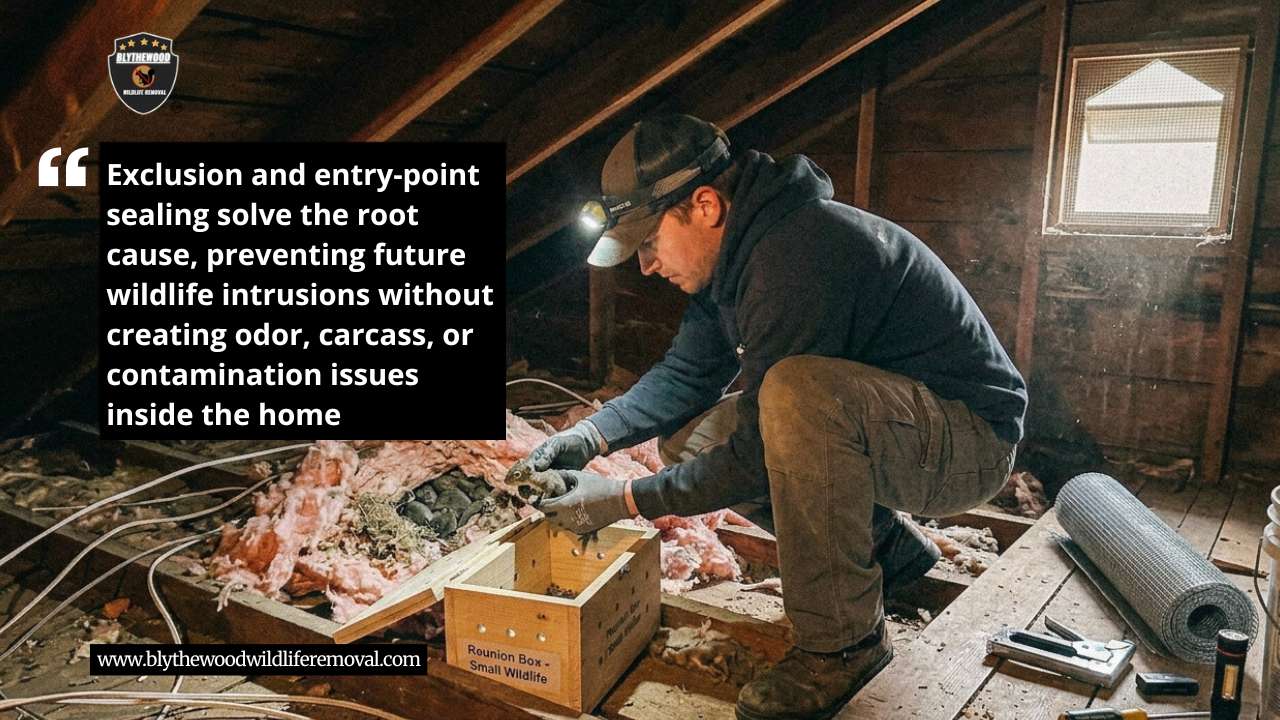
For animals with young, such as a raccoon that has given birth in an attic, a humane approach means accounting for the whole family, not just trapping the first animal that walks into a cage. Removing a mother without addressing her litter creates a worse problem, one that involves suffering inside your walls and a contamination issue that follows.
Why the Method Produces Better Outcomes for Homeowners
This is the part that often surprises people. Humane methods aren’t just ethically preferable. They tend to work better.
Poison, for example, is still used by some operators for rodent problems inside structures. The animal dies somewhere inside the wall or attic, and now you have a carcass you can’t access, an odor that can last weeks, and flies. The removal problem is solved, but a new problem has been created. We’ve handled plenty of calls from homeowners dealing with exactly this situation after another company’s approach.
Kill traps placed without thought to species, location, or entry patterns also tend to catch one animal while leaving the actual entry point open. Another animal finds it within days or weeks. The root cause, which is how the animal got in, was never addressed.
Exclusion and live trapping combined with proper entry point sealing is a more complete process. The animal is gone, the way in is closed, and there’s no carcass rotting somewhere inside the structure.
What It Means for Protected Species
For some species, humane methods aren’t optional. They’re legally required. Bats are the clearest example. In South Carolina, bats are protected under state and federal wildlife regulations. You cannot poison them, trap them in a cage, or seal them inside a structure.
The only legal removal method is exclusion, and during maternity season it’s restricted further because flightless young are present. Any company offering a quick fix for bats without mentioning exclusion protocols or seasonal timing is not operating within the law.
Our bat removal service follows all South Carolina exclusion regulations, including proper timing around maternity season. It takes longer than a shortcut. It also doesn’t expose you to legal risk or leave you with a repeat problem two months later.
The Inspection Is Where Humane Removal Starts
A genuinely humane approach begins before any trapping or exclusion device is installed. It starts with a thorough inspection that identifies the species, assesses how many animals are involved, locates all entry points, and checks whether young are present.
That information shapes every decision that follows. The wrong method applied to the right species, or the right method applied without knowing a litter is present, creates outcomes no one wants.
At Blythewood Wildlife Removal, every job starts with a free inspection for exactly this reason. We don’t show up and start setting traps. We look at what’s happening first, explain what we find, and build the removal plan around the actual situation at your property.
What to Ask Any Company Before Hiring
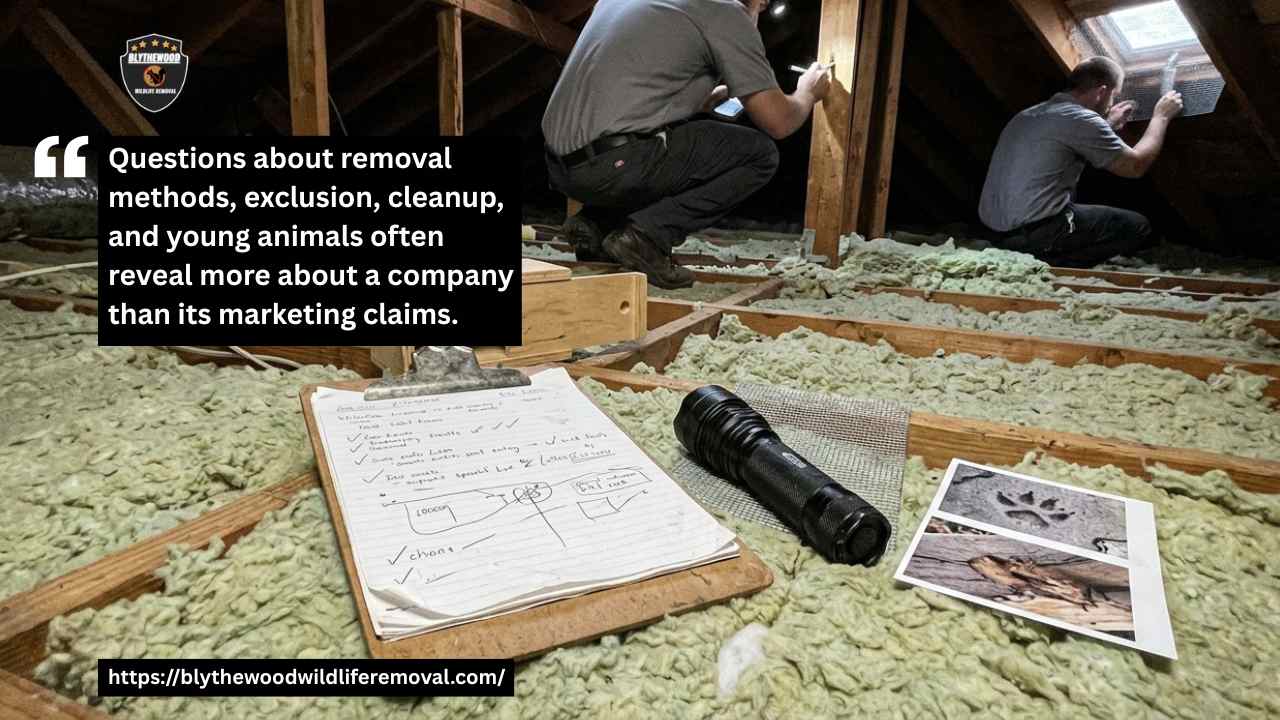
If you’re evaluating wildlife removal companies in Lexington or Columbia, a few questions cut through the marketing quickly.
- Ask whether they use live trapping or kill methods, and under what circumstances.
- Ask how they handle bats specifically and whether they follow South Carolina exclusion protocols.
- Ask what happens if young are present.
- Ask whether they seal entry points after removal or only remove the animal.
- Ask whether cleanup and decontamination are included or separate.
A company doing this properly will have straightforward answers to all of these. Vague responses or pressure to skip the inspection phase are both signs worth paying attention to.
Our wildlife removal and extraction services cover the full scope of what a complete job looks like, from initial inspection through exclusion, cleanup, and entry point sealing.
Why It Matters for Your Home Specifically
Beyond the animal welfare question, humane methods protect your property in ways that shortcuts don’t.
A dead animal inside a wall or attic from a poison-based approach creates an odor problem, a fly problem, and a decomposition residue that attracts insects and new animals to the same location. A trap that catches one animal without sealing the entry leaves your home open. An incomplete job that removes the visible animal but misses a litter means the problem continues.
Proper humane removal, done by someone who knows what they’re doing, closes the loop. The animal is gone, the entry is sealed, the area is clean, and you’re not calling again in six weeks.
That’s what we do at Blythewood Wildlife Removal. We’ve been handling wildlife problems across Lexington, Columbia, and the Midlands for over 15 years.
Owner: Kevin Ohalpin
Phone: 1-803-760-9166
Address: 122 Woodcraft Dr, Lexington, SC 29073
Service Areas: Lexington, Columbia, Blythewood, West Columbia, Chapin, Irmo, Jenkinsville, Leesville, Batesburg, Northeast Columbia, and surrounding South Carolina communities
Hours: Open 24 hours, 7 days a week
Veteran-owned, licensed, insured, and available 24 hours a day. If you want to know what’s getting into your home and how to handle it the right way, call us first.
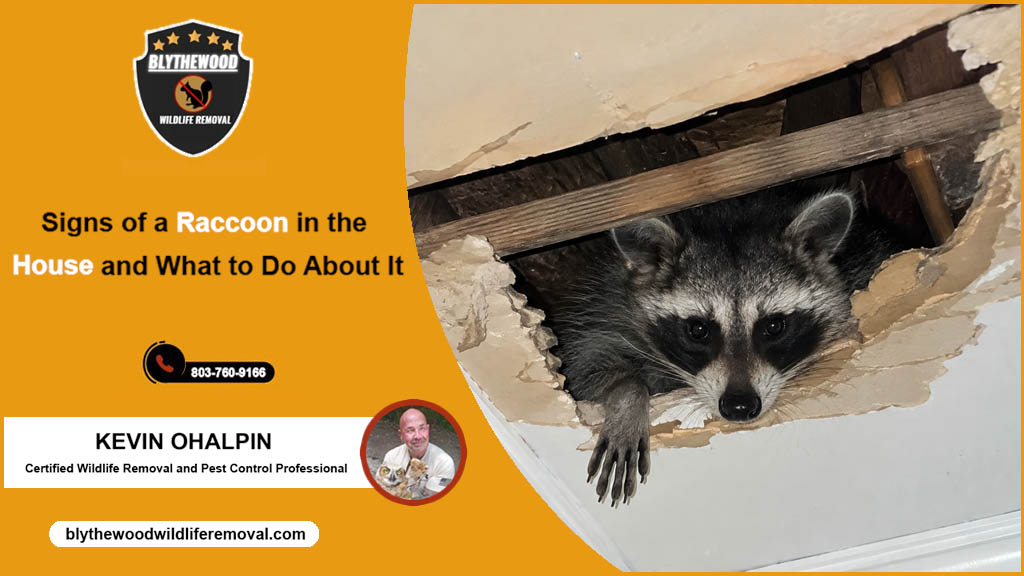
- Signs of a Raccoon in the House and What to Do About It - September 16, 2026
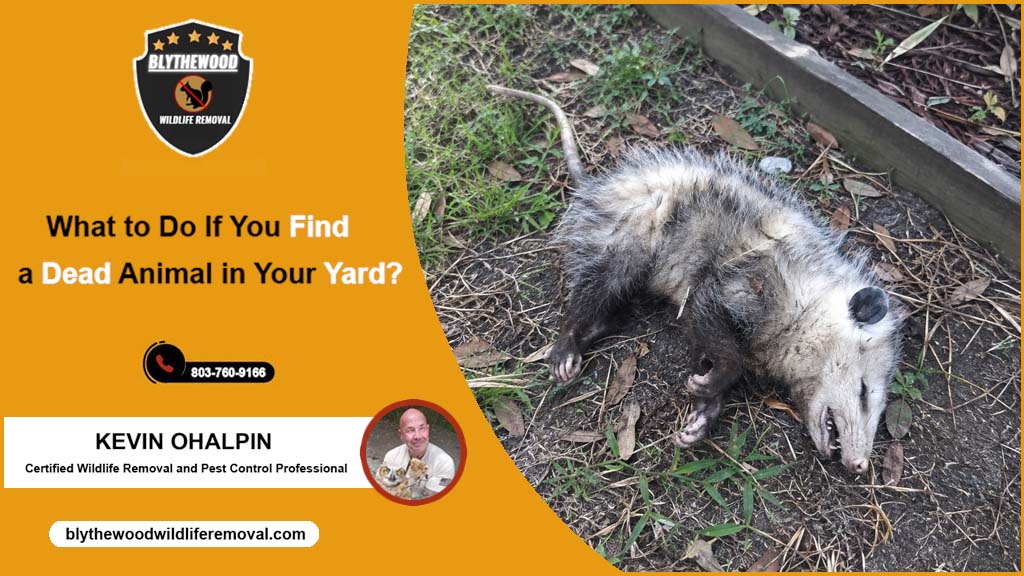
- What to Do If You Find a Dead Animal in Your Yard? - September 16, 2026
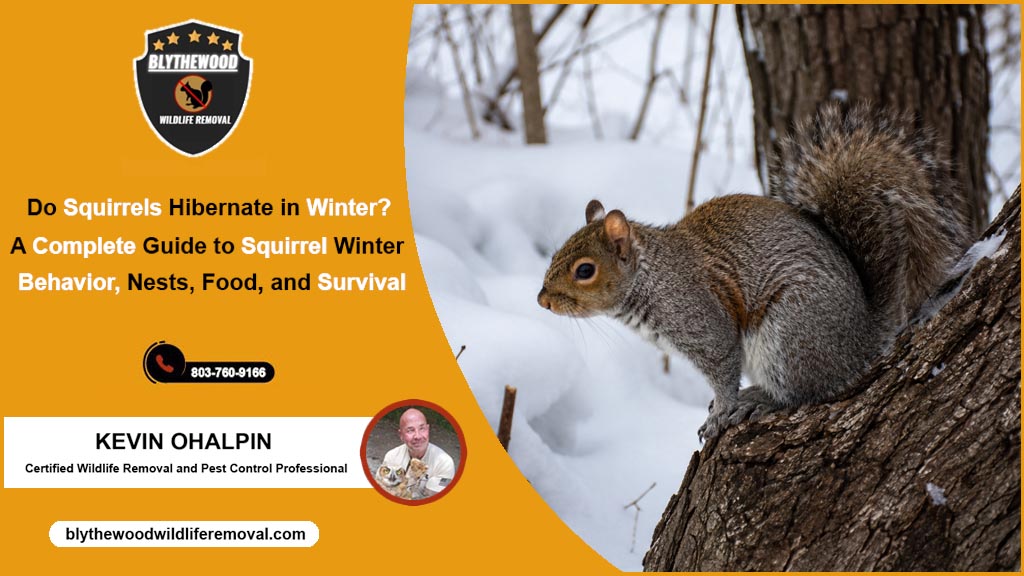
- Do Squirrels Hibernate in Winter? A Complete Guide to Squirrel Winter Behavior, Nests, Food, and Survival - September 16, 2026