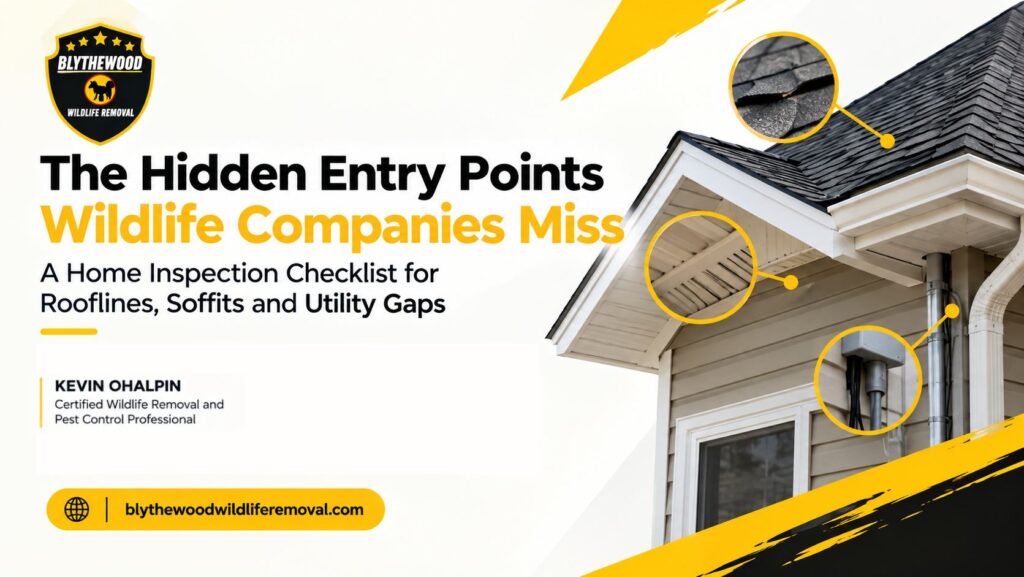
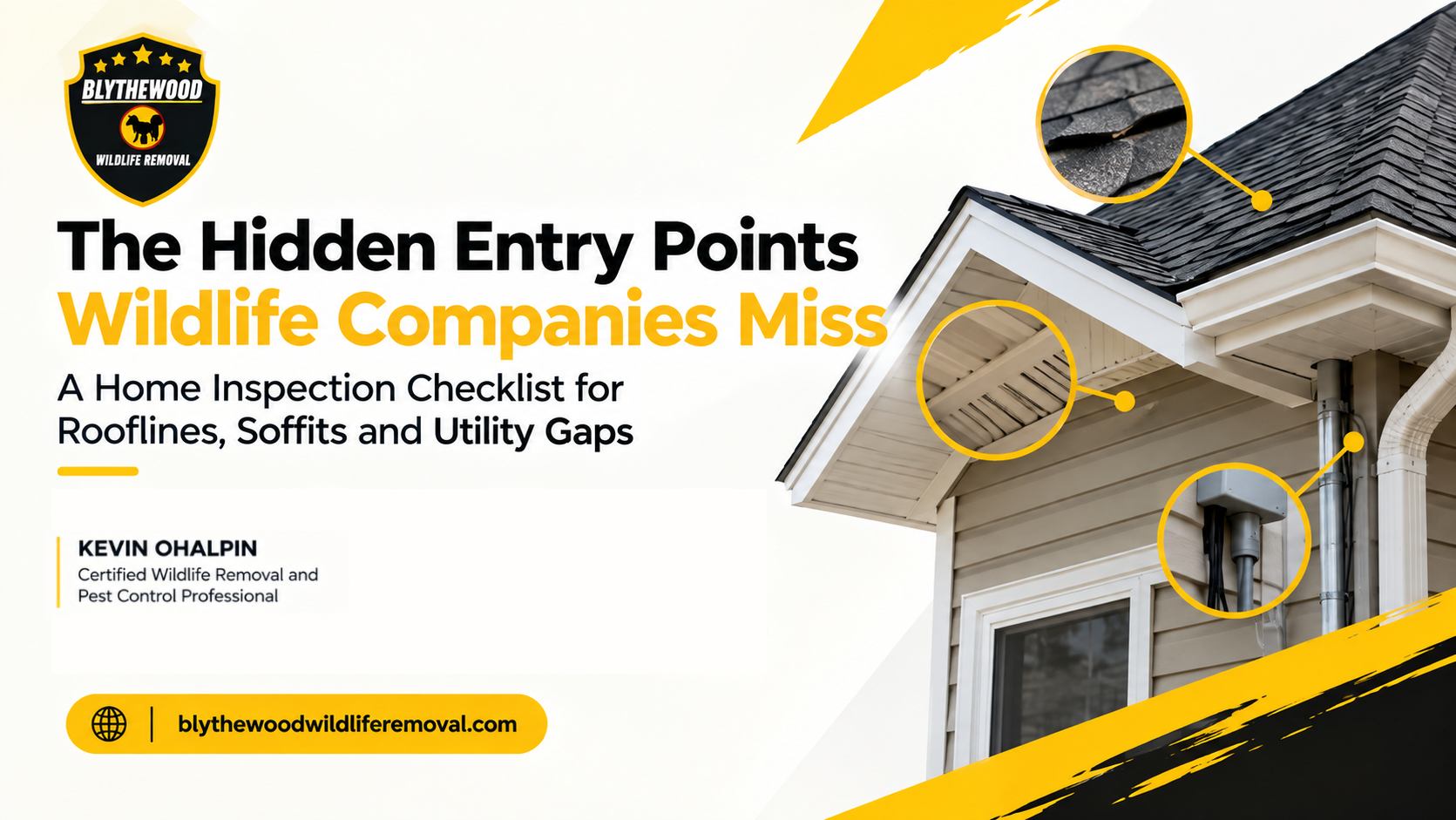
The Hidden Entry Points Wildlife Companies Miss: A Home Inspection Checklist for Rooflines, Soffits, and Utility Gaps
October 23, 2026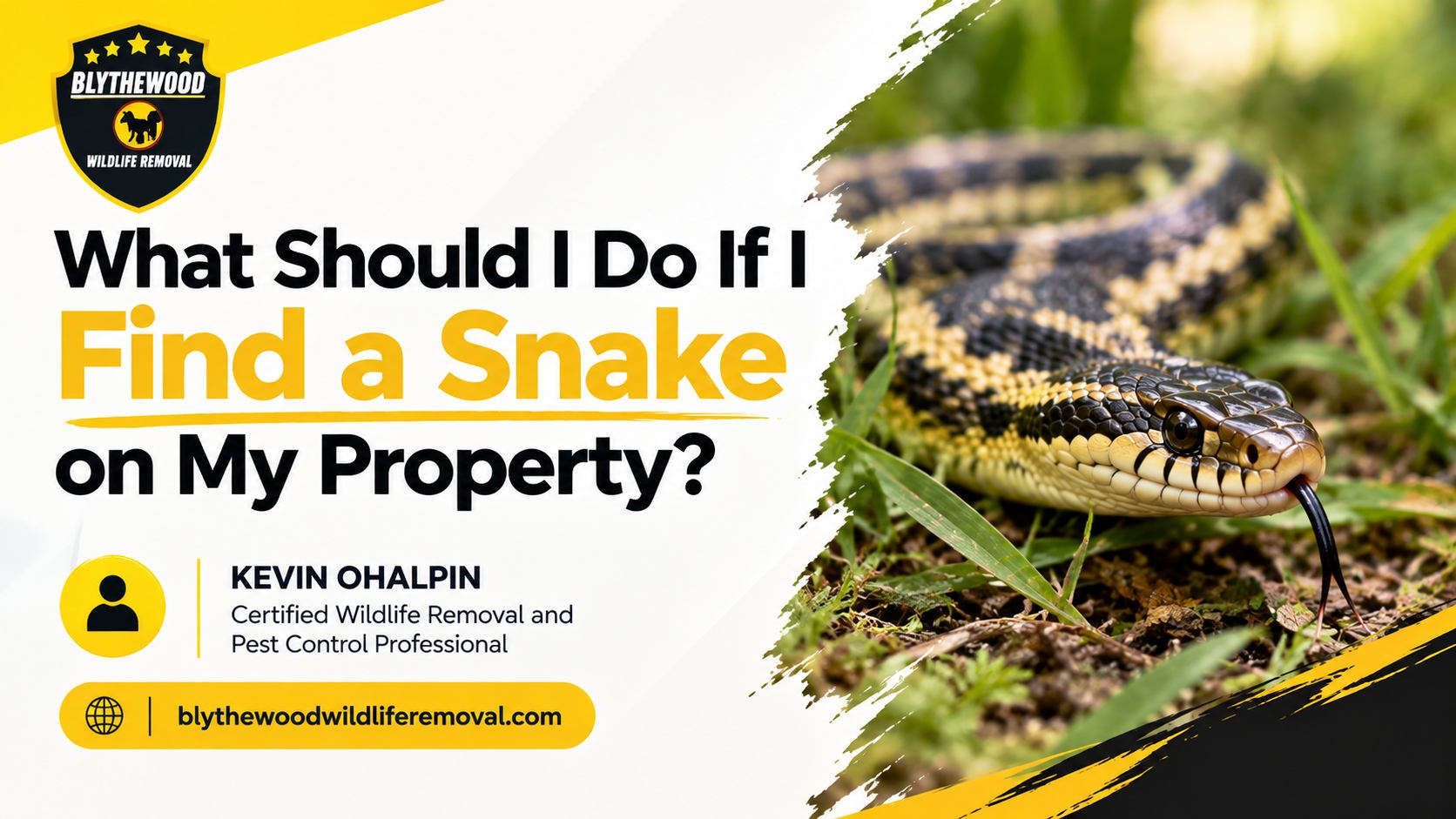
What Should I Do If I Find a Snake on My Property? Tips For South Carolina Folks
October 25, 2026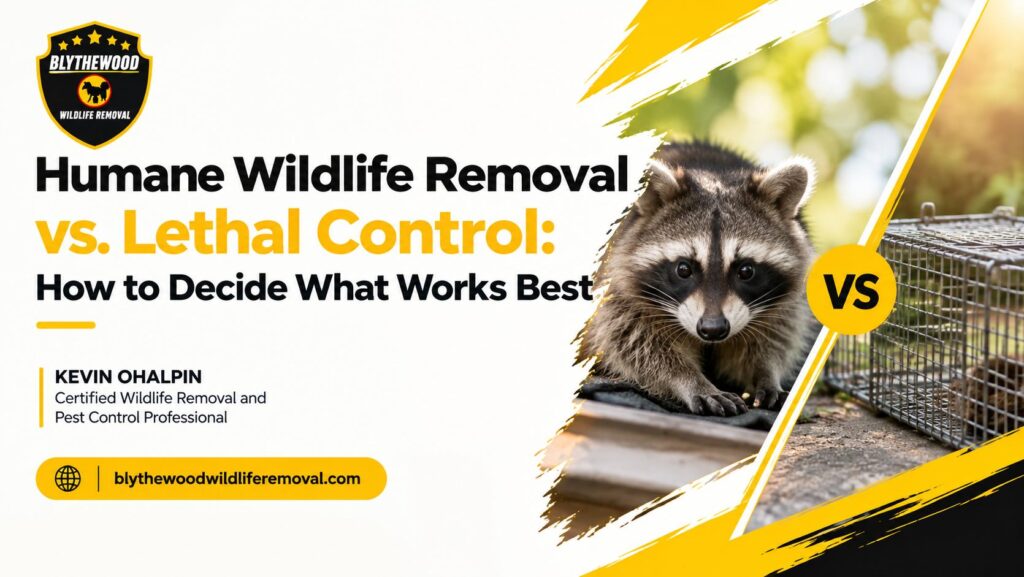
Quick answer: Humane removal traps and relocates the animal, then seals the entry point so it can’t return, while lethal control kills it outright and is mostly limited to high-volume rodent situations. Bats and most snakes are legally protected or simply not appropriate targets for lethal methods, and South Carolina regulates how larger wildlife like raccoons can be relocated. The right method depends on the species, the law, and whether the goal is removing one animal or controlling a population.
When an animal moves into your attic or crawlspace, the fastest question isn’t always the right one. Homeowners often want to know how quickly it can be gone, but the method matters just as much as the timeline, because it affects whether the problem actually stays solved, whether it’s legal, and whether it lines up with how you want the job handled.
Humane removal and lethal control are the two paths, and they’re not interchangeable. Here’s how they actually differ, and how to think through which one applies to your situation.
What humane wildlife removal actually means
Humane removal is trapping and relocating a live animal, paired with work to keep it (or the next one) from getting back in. Done properly, it’s a three-part process: locate the animal and its entry points, remove it without unnecessary harm, and seal the structure so the space can’t be reused.
Catching the animal solves today’s problem. Sealing the gap it used is what prevents next month’s problem, something covered in more depth in the checklist for spotting entry points around rooflines, soffits, and utility gaps that most inspections miss.
Humane methods generally include:
- Live cage trapping, checked frequently so animals aren’t left stressed for long periods
- One-way exclusion devices that let an animal leave but not re-enter, useful when there are no babies present
- Hand capture for animals like snakes, which is often faster and less stressful than trapping
- Habitat modification, like removing food sources or brush piles, to discourage the animal from returning
What lethal control means, and where it’s still used
Lethal control kills the animal rather than relocating it. This is standard practice for certain rodent situations, particularly rats and mice, where population size, disease risk, and the sheer number of entry points make live trapping impractical at scale. Snap traps, and in some commercial settings, professional-grade poison stations placed and monitored by a licensed technician, fall into this category.
However, for larger wildlife like raccoons, opossums, or squirrels, the situation is different. Lethal methods for these species are more heavily regulated, and in South Carolina, nuisance wildlife are often required to be released on-site or euthanized rather than relocated off the property under Department of Natural Resources rules, depending on the species. That distinction is important, because it means relocation isn’t always the automatic legal default people assume it is, and a company should be able to explain what applies to your specific animal before doing anything.
Why the two approaches produce different outcomes
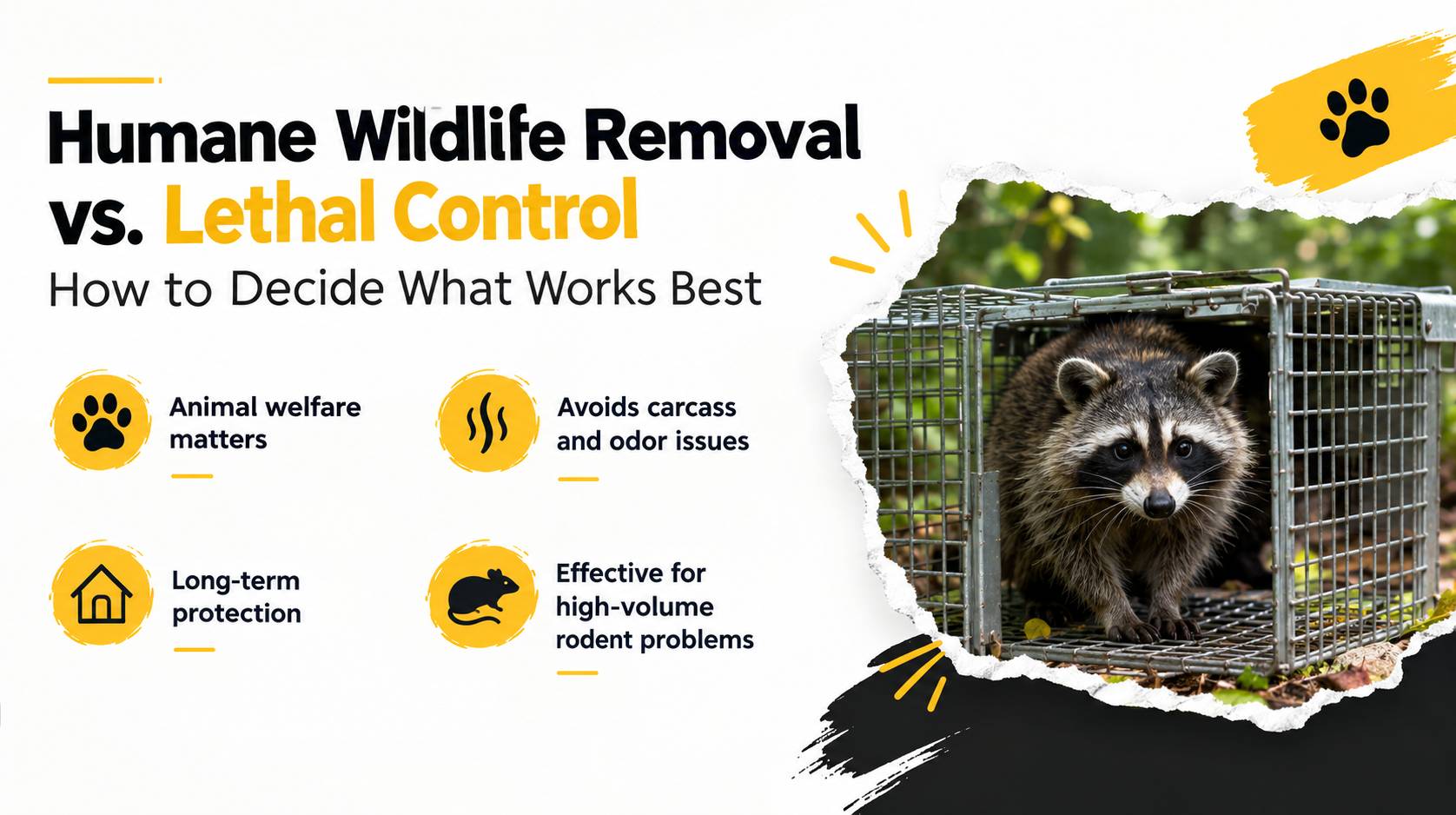
The obvious difference is animal welfare. But there are practical differences too.
Lethal methods for larger animals can leave a carcass inside a wall or attic, which creates the odor and contamination problem. And that’s why dead animal removal and getting rid of that smell fast becomes an additional task. Live trapping avoids that outcome entirely, since the animal leaves under its own power once released.
Humane exclusion also tends to hold up better long-term, because it’s built around fixing the entry point, not just removing whoever is using it right now. A dead animal doesn’t seal the hole behind it. Something else eventually will find the same gap.
Lethal control has its own advantage in high-volume rodent situations, where the population turns over faster than trapping alone can keep pace with, and where the goal is population control rather than removing one individual animal.
Species where the choice is mostly made for you
Some species come with legal protections that take the decision out of a general “which method is better” conversation.
- Bats are protected under state and federal wildlife law in most cases, and lethal control is both illegal and counterproductive. Exclusion is the only method that applies. That timing detail is a big part of why bat jobs get handled the way they’re described in the guide to bat removal for Columbia homes.
- Venomous snakes in Columbia aren’t killed as a matter of course either. Most species found around Midlands homes, including copperheads, are non-venomous or provide rodent control, and the homeowner’s guide to identifying venomous species in the Columbia Midlands walks through which ones actually warrant extra caution. Hand capture and relocation are almost always the right call, both for safety and because snakes are difficult to trap effectively.
- Raccoons and squirrels typically fall under humane trapping requirements in most residential situations, especially when there’s a chance of babies in a den.
- Rats and mice are the clearest case for lethal control, given how fast they reproduce and how many entry points a single infestation usually involves.
Cost and effectiveness
Lethal control for rodents is often cheaper upfront, since it doesn’t require the labor of live capture and transport. For rats and mice, it’s also usually more effective at actually reducing numbers quickly.
For larger wildlife, cost differences between humane and lethal methods are smaller than people expect. A trapped-and-released raccoon and a lethally controlled one cost roughly the same to remove. The actual cost driver is how much sealing and repair the entry points need, not which method got the animal out.
Questions to ask before you agree to either method
- What method do you use for this specific animal, and why?
- Is this species protected, and does that change what’s legal here?
- If it’s a lethal method, how do you prevent a carcass from ending up somewhere inaccessible?
- If it’s live trapping, how often do you check traps, and where are animals released?
- Does the price include sealing the entry point, or only the removal itself?
A company that can answer these clearly, with species-specific reasoning rather than a blanket policy, is one that’s actually thought through the job rather than defaulting to whatever is fastest for them.
How we handle this at Blythewood
We default to humane methods across almost every job we take on, because it’s both the better outcome for the animal and, in most cases, the more durable fix for the homeowner. Lethal control has a narrow, legitimate place in rodent-heavy situations, and we’ll use it there when it’s the right tool, but it’s not our starting point for raccoons, squirrels, bats, opossums, or snakes.
Every job includes a full inspection so the method matches the actual animal and situation in front of us.
If you’re dealing with an animal in Columbia, Blythewood, Irmo, Chapin, West Columbia, or on the Lake Murray side of Lexington, our team can tell you within a phone call which method applies to your situation and why, including for homeowners on the Lexington side of the river.
Blythewood Wildlife Removal
Phone: 1-803-760-9166
Email: [email protected]
Hours: Open 24 hours
Address: 1314 Lincoln St, Columbia, SC 29201
Serving: Columbia, Lexington, Blythewood, Irmo, Chapin, and West Columbia
- What Should I Do If I Find a Snake on My Property? Tips For South Carolina Folks - October 25, 2026
- Humane Wildlife Removal vs. Lethal Control: How to Decide What Works Best - October 24, 2026
- The Hidden Entry Points Wildlife Companies Miss: A Home Inspection Checklist for Rooflines, Soffits, and Utility Gaps - October 23, 2026