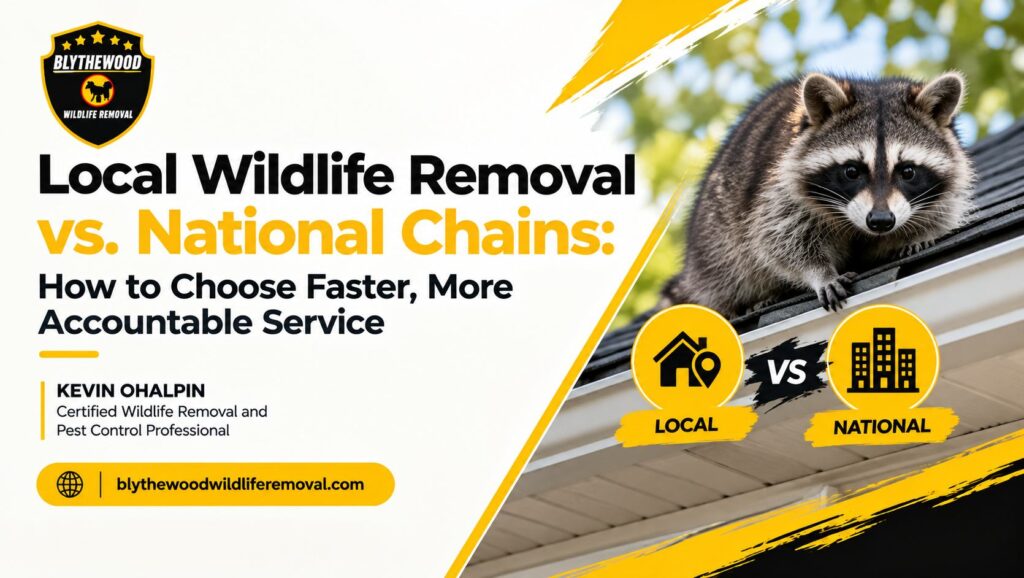
Local Wildlife Removal vs. National Chains: How to Choose Faster, More Accountable Service
October 22, 2026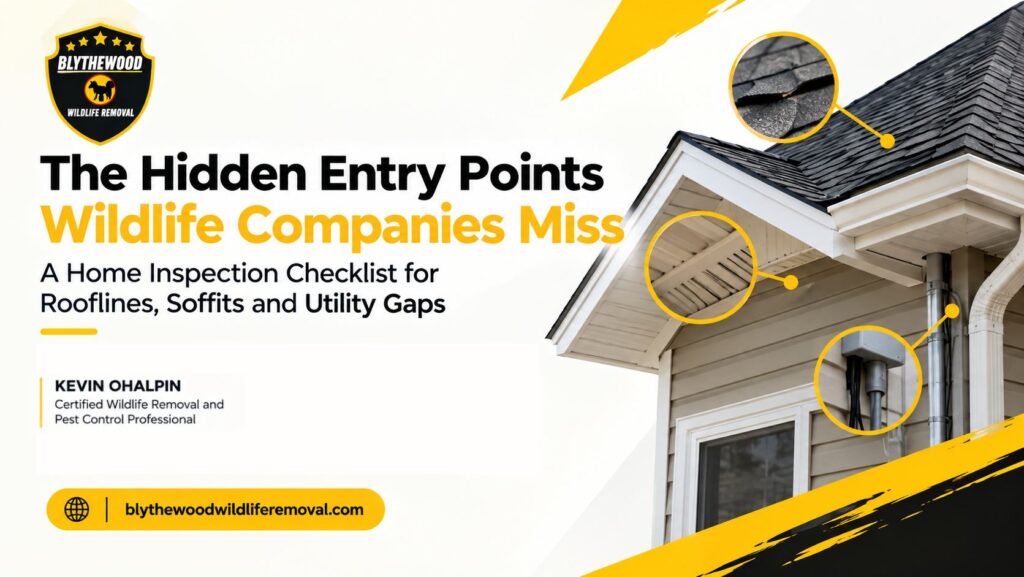
Quick answer: Most repeat wildlife problems happen because the entry point was never found, not because the removal failed. The biggest blind spots are roofline junctions, soffit and fascia damage, chimney caps, and utility penetrations for plumbing, dryer vents, and HVAC lines. A thorough check means walking the full exterior, inspecting the attic in daylight with the lights off, and checking crawlspace vents, then sealing only after confirming the animal is out.
Most wildlife removal jobs don’t fail because the animal wasn’t caught. They fail because the hole it came through was never found. If the entry point is still open, removal was only ever a temporary fix.
I’ve walked hundreds of homes at this point, and the pattern is consistent. The obvious gaps get checked. The ones that get missed are higher up, smaller, or tucked behind something nobody thinks to move. Here’s where I look, and where I’d tell you to look too.
Why entry points get missed in the first place
Some inspections are rushed. A technician glances at the attic, sees an animal, sets a trap, and calls it done. That handles the symptom, not the cause.
But even a careful inspection can miss a gap if it’s not done from the right angle. Roofline damage often only shows from a ladder, not from the ground. A soffit gap can sit behind a downspout or a tree limb that blocks the sightline. Utility penetrations are frequently painted or caulked over on the outside while still open on the inside, so a visual pass from the yard tells you nothing. Finding these takes a walk around the entire exterior, plus a look from inside the attic with a flashlight during daylight, when any gap shows as a pinpoint of light.
Roofline and soffit checkpoints
The roofline is where most wildlife entries happen, because it’s where wood, metal, and shingle materials meet, and that’s where gaps open up over time.
- Roof-to-wall junctions. Where the roof meets the siding, flashing can pull away after years of expansion and contraction. A half-inch gap is enough for a rat. A two-inch gap is enough for a squirrel.
- Soffit and fascia damage. Soffits are usually thin vented panels, and they’re a favorite raccoon entry because the material gives way under a determined paw. Look for chew marks, sagging panels, or soffit vents with torn screening. Fascia boards that have started to rot from water backup behind clogged gutters create the same opening.
- Gable and ridge vents. These are built to let air through, not animals, but old or damaged vent screens don’t discriminate. Bats in particular can slip through gaps as small as a half inch near ridge vents, which is part of why I cover this in detail in my guide to bat removal in Columbia.
- Loose or missing shingles near valleys. Roof valleys collect debris and hold moisture, which weakens the decking underneath. A soft spot here can eventually become a hole that animals widen further.
- Chimney caps and flashing. An uncapped chimney is essentially an open door for raccoons and, less often, birds. Flashing that has separated from the chimney base creates a second gap even when a cap is in place.
Utility gaps often get overlooked
Utility penetrations are where a contractor drilled a hole for a purpose unrelated to wildlife, and then never sealed it properly once the job was done.
Plumbing and electrical penetrations. Anywhere a pipe or wire enters the house, from the exterior wall or the roofline, there’s a chance the surrounding gap was never filled, or the original sealant has degraded.
Dryer and bathroom exhaust vents. These often have a flap that’s supposed to stay closed, but a broken or missing flap turns the vent into an entry point, especially for mice and small birds.
HVAC line sets. Where refrigerant lines run from an outdoor unit into the house, the wall penetration is sometimes sealed with foam that shrinks or gets chewed through over time.
Gas line and meter penetrations. Similar issue to plumbing. The hole is usually sealed at installation, but not always maintained.
Crawlspace vents and access doors. A missing screen on a foundation vent, or an access door that doesn’t sit flush, is one of the most common entry points for opossums and snakes. If snakes are part of what you’re watching for, I go through the species most common in this area in my snake safety guide for the Columbia.
A room-by-room walkthrough you can do yourself
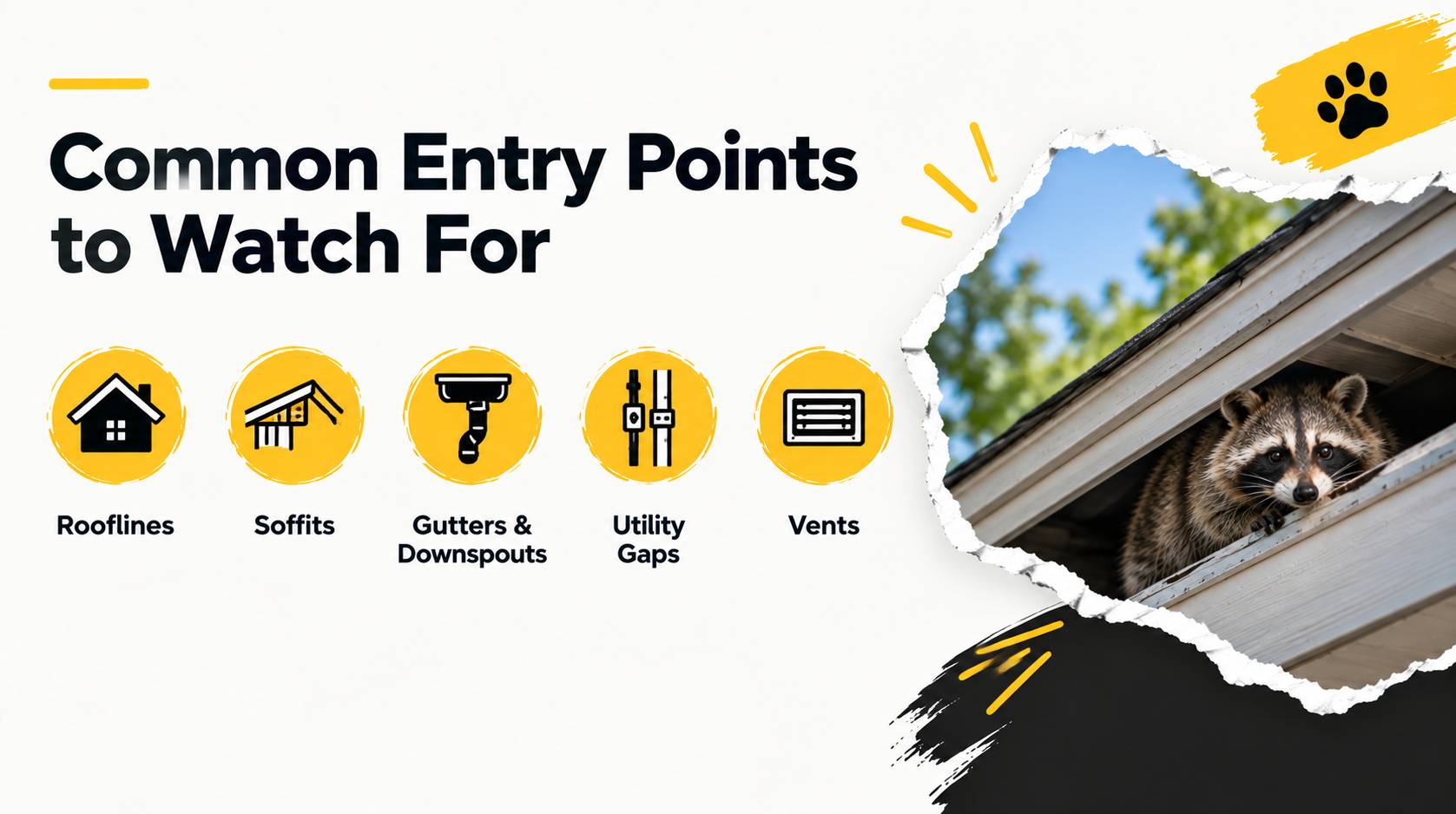
You don’t need to climb on the roof to catch most of this. Start from the ground and work up.
- Exterior walk, all four sides. Look at the base of the house for foundation gaps, then scan up toward the roofline for anything that looks out of place.
- Gutters and downspouts. Clogged gutters hold water against the fascia and soffit, which speeds up the rot that creates entry points. Clear gutters aren’t just a maintenance task; they’re prevention.
- Attic, during the day, lights off. Any pinpoint of daylight is a gap worth marking. Bring a flashlight for the corners the sun doesn’t reach.
- Crawlspace. Check vent screens and the access door seal. Note any droppings, since old ones tell you about past activity and fresh ones tell you the problem is current.
- Around exterior utility lines. Walk the perimeter and check every spot where a pipe, wire, or vent goes through the wall.
What to do once you find a gap
Finding the entry point is only half the job. Sealing it has to happen after the animal is out, not before, or you risk trapping something inside the wall or attic. That’s part of why odor problems from a trapped or deceased animal can get so much worse so quickly, something I cover in my article on dead animal removal and odor elimination.
Once the space is confirmed clear, the seal itself needs to match the material and the animal. Steel mesh works for rodent-proofing gaps that foam alone won’t stop, since rodents can chew through foam in a single night. Larger gaps from raccoon damage usually need a rigid repair, not just caulk. This is also where I’d caution against a quick DIY patch: a gap sealed with the wrong material, or sealed before confirming the animal is gone, tends to reopen or trap the problem inside.
Why this matters more than the initial removal
A removal without exclusion work is a temporary win. I’ve been called back to homes where a previous company trapped an animal, charged for the job, and left without checking for the entry point at all. The homeowner assumed it was solved, until the next one showed up weeks later through the same gap.
This is also why an inspection needs to be thorough the first time. Our process at Blythewood always includes a full exterior and attic walkthrough before we finalize a plan, because sealing four gaps and missing a fifth just means a different animal finds the fifth one eventually.
When to call a professional instead of handling it yourself
A visual inspection is something most homeowners can do. Sealing entry points safely, especially at roof height or around live utility lines, is where I’d recommend a professional, both for safety and because certain gaps require material choices that hold up long-term rather than a quick patch.
If you’re in Columbia, Blythewood, Irmo, Chapin, West Columbia, or the Lake Murray side of Lexington and want a second set of eyes on your roofline, soffits, or utility penetrations, that’s exactly the kind of inspection we do before any trapping or sealing begins. Homeowners on the Lexington side of the river can find more on how we work there through our Lexington wildlife removal services page.
Blythewood Wildlife Removal
Phone: 1-803-760-9166
Email: [email protected]
Hours: Open 24 hours
Address: 1314 Lincoln St, Columbia, SC 29201
Serving: Columbia, Lexington, Blythewood, Irmo, Chapin, and West Columbia
- The Hidden Entry Points Wildlife Companies Miss: A Home Inspection Checklist for Rooflines, Soffits, and Utility Gaps - October 23, 2026
- Local Wildlife Removal vs. National Chains: How to Choose Faster, More Accountable Service - October 22, 2026
- Signs of a Raccoon in the House and What to Do About It - September 16, 2026