Animal Droppings Identification: What the Poop in Your Attic is Telling You
May 22, 2026
Best Wildlife Removal Companies in Lexington, SC and Which One Is Right for Your Situation
June 24, 2026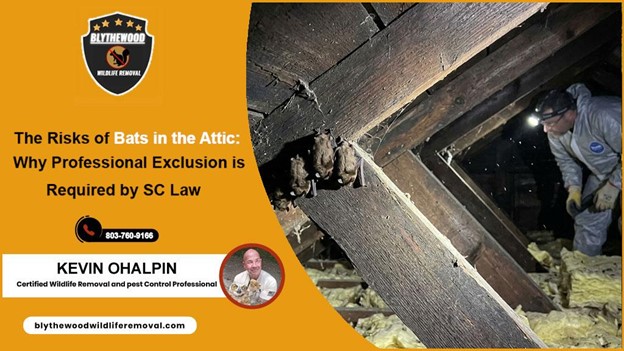
Bats inside an attic are not something homeowners should ignore or try to handle on their own. While bats help control insects outdoors, they can create serious problems once they move into a home.
In Columbia, SC, bat activity inside attics is more common than many people realize, especially in older homes, wooded neighborhoods, and properties with roofline gaps or damaged vents.
Bat removal service calls often increase during warmer months when colonies become more active around homes throughout Columbia. One of the biggest misunderstandings homeowners have is assuming bats can simply be trapped or removed like other animals. In reality, South Carolina law requires bats to be handled through proper exclusion methods.
Why Bats Commonly Enter Columbia Attics
Attics provide the exact environment bats look for. They are dark, warm, protected from predators, and usually undisturbed for long periods. Small roofline gaps, attic vents, loose flashing, and openings near soffits give bats easy access without homeowners noticing.
Homes near wooded areas like Forest Acres, Rosewood, and areas close to the Saluda River often experience more bat activity because bats naturally roost near trees and water sources.
One important thing to understand is that bats do not need large openings to enter. Even narrow gaps along roof edges may allow an entire colony inside over time.
The Biggest Risks of Bats Inside the Attic
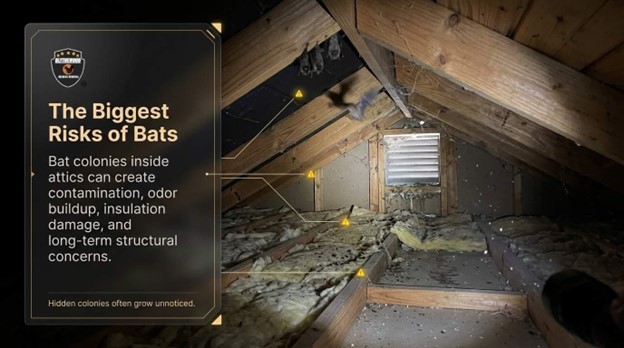
Many homeowners assume bats are harmless because they are quiet compared to raccoons or squirrels. The real concerns usually develop gradually.
Bat Droppings and Odor Problems
Bat droppings, called guano, build up underneath roosting areas. Over time, guano creates strong odors and contaminates insulation and attic materials.
Large accumulations can also affect indoor air quality, especially when attic airflow spreads particles into living spaces below.
This is one reason attic cleanup becomes important after bat removal services are completed.
Health Concerns Associated With Bats
Not every bat carries disease, but bats are still considered a health concern when they enter homes.
Direct contact with bats should always be avoided. If a bat enters living spaces, especially bedrooms or areas with children or pets, professional inspection is strongly recommended.
Bat colonies may also carry parasites like mites or fleas that spread into attic areas over time.
Structural and Insulation Damage
Bat colonies can remain inside attics for long periods without detection. During that time, droppings and urine contamination often soak into insulation and surrounding materials.
The longer the colony stays, the more expensive the cleanup and restoration usually become.
Why South Carolina Law Requires Bat Exclusion
South Carolina protects bats because they play an important role in the environment and insect control.
Because of this, bats cannot simply be poisoned, trapped randomly, or killed in most situations. Professional bat removal is typically done through a process called exclusion.
Exclusion allows bats to leave safely while preventing them from getting back inside.
This usually involves:
- Identifying every active entry point
- Installing one-way exclusion devices
- Allowing bats to exit naturally
- Sealing all access areas afterward
This process must be done carefully and at the correct time of year. For example, exclusion work cannot be performed improperly during maternity season when baby bats may still be unable to fly. Blocking mothers out too early can leave young bats trapped inside the attic.
That is why professional bat exclusion services are important instead of DIY removal attempts.
Why DIY Bat Removal Often Creates Bigger Problems
Homeowners sometimes try using sprays, bright lights, loud noises, or store-bought repellents to force bats out. Most of these methods do not work long-term.
In some cases, DIY sealing actually traps bats inside walls or attic spaces, leading to odor problems and dead animal removal situations later.
Professional wildlife inspections help determine:
- How bats are entering
- How large the colony may be
- Whether maternity season restrictions apply
- What exclusion method is safest and legal
At Blythewood Wildlife Removal, our team uses humane and legally compliant exclusion methods designed to solve the problem without harming protected wildlife.
Signs You May Have Bats in the Attic
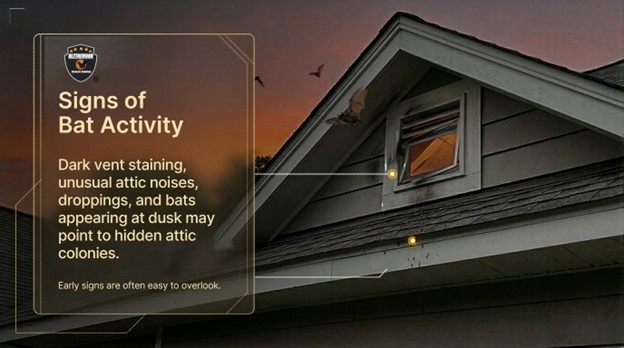
Bat problems are often quieter than other wildlife infestations, but there are still clear warning signs homeowners should watch for.
- Light scratching or fluttering sounds at night
- Bats flying near the roof at dusk
- Dark staining near roof gaps or vents
- Small droppings are collecting below attic openings
- Strong attic odors are developing over time
Why Fast Inspection Matters
Bat colonies rarely leave on their own once they settle inside an attic. The longer they remain, the higher the cleanup and repair costs usually become.
Early inspection helps reduce:
- Insulation contamination
- Odor buildup
- Structural damage
- Health concerns
- Repeat infestations
This is why many homeowners schedule inspections as soon as they notice attic activity instead of waiting for the problem to grow.
Bat Removal and Wildlife Exclusion in Columbia, SC
If you suspect bats inside your attic, it is important to avoid sealing openings or attempting removal without professional guidance. Bat removal in South Carolina requires careful exclusion methods that follow state wildlife regulations while protecting the home from future infestations.
Blythewood Wildlife Removal provides trusted and reliable bat removal, attic inspections, exclusion services, cleanup, and wildlife prevention throughout Columbia, SC. Our team also handles rodent removal, raccoon removal, squirrel removal, snake removal, and other wildlife problems affecting attics and crawlspaces.
We focus on humane wildlife removal, long-term exclusion work, and same-day inspection availability for homeowners throughout Columbia and nearby areas.
Contact Blythewood Wildlife Removal
Business Name: Blythewood Wildlife Removal
Address: 1314 Lincoln St, Columbia, SC 29201
Phone: 803-760-9166
Email: [email protected]
Final Thoughts
Bats inside the attic should never be treated as a simple nuisance problem. Even though they are beneficial outdoors, they can create serious contamination, odor, and health concerns once they move into a home.
Because bats are protected under South Carolina wildlife regulations, professional exclusion is the safest and most effective way to remove them legally while preventing future entry. Acting early usually makes the process easier, cleaner, and less expensive in the long run.
FAQs About Bats in Attics in Columbia, SC
Why are bats protected in South Carolina?
Bats help control insect populations and are considered environmentally important wildlife, which is why removal methods are regulated.
Is it illegal to kill bats in South Carolina?
In many situations, improper killing or removal methods may violate wildlife regulations. Professional exclusion is the recommended approach.
What does bat guano look like?
Bat droppings are small, dark, and crumbly. They often collect beneath roosting areas inside attics.
Can bats damage attic insulation?
Yes. Bat droppings and urine can contaminate insulation and create strong odors over time.
Are bats dangerous inside homes?
Bats should not be handled directly because of potential health risks and contamination concerns.
Does Blythewood Wildlife Removal offer bat exclusion services?
Yes. Blythewood Wildlife Removal provides humane bat exclusion, attic inspections, cleanup, and wildlife prevention services throughout Columbia, SC.
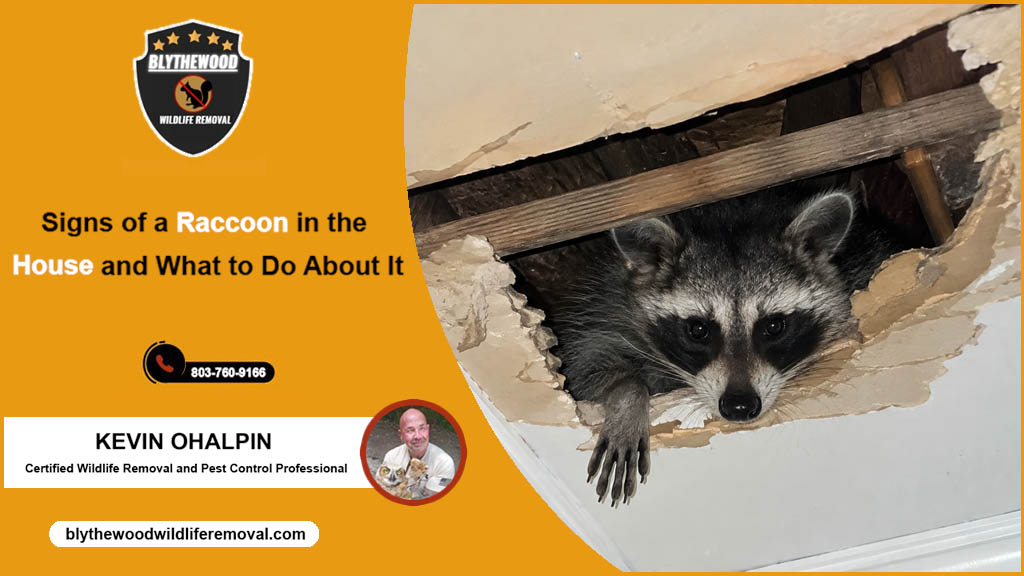
- Signs of a Raccoon in the House and What to Do About It - September 16, 2026
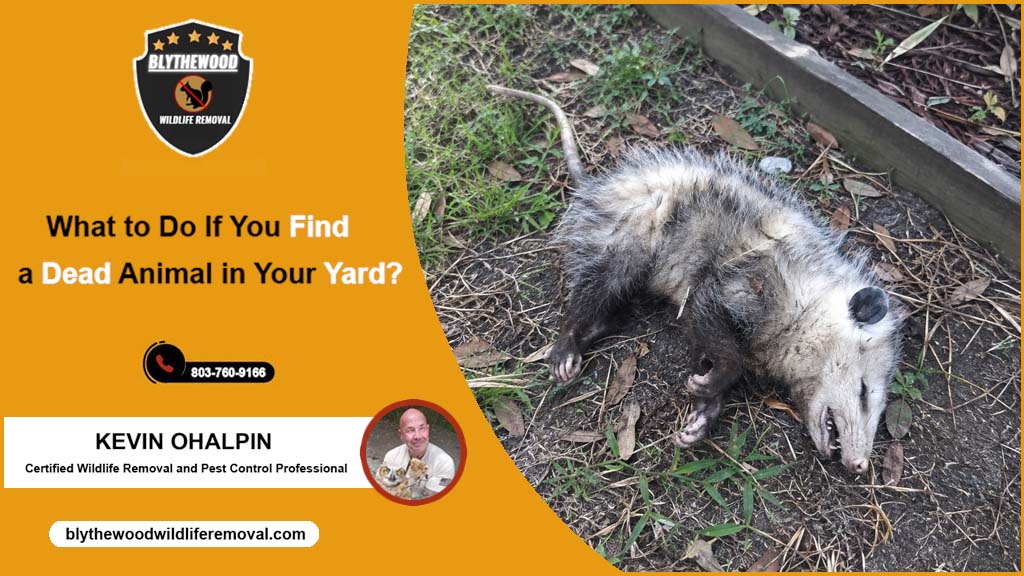
- What to Do If You Find a Dead Animal in Your Yard? - September 16, 2026
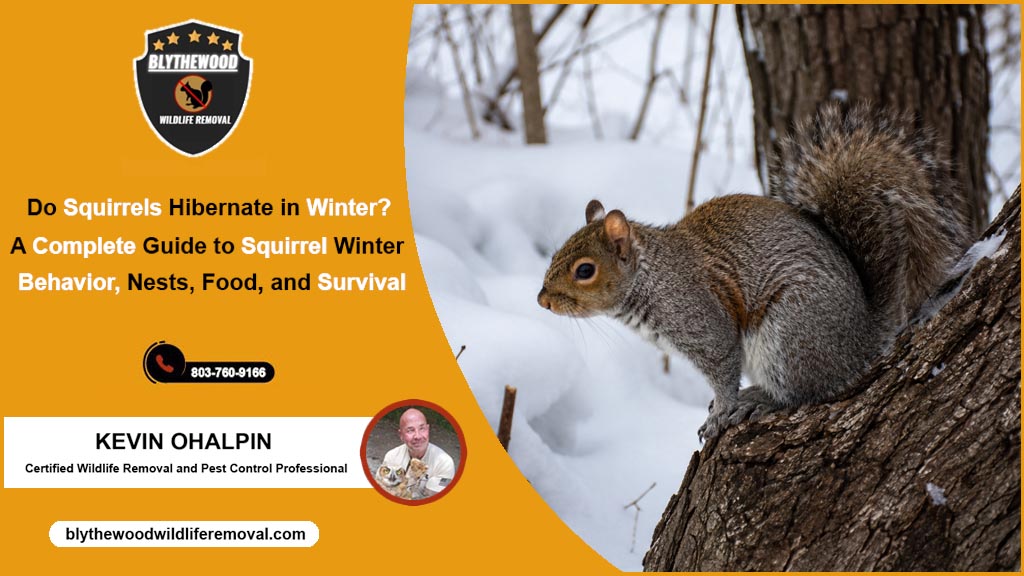
- Do Squirrels Hibernate in Winter? A Complete Guide to Squirrel Winter Behavior, Nests, Food, and Survival - September 16, 2026