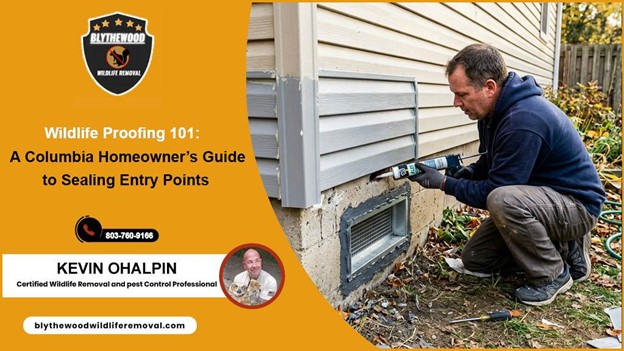
Wildlife Proofing 101: A Columbia Homeowner’s Guide to Sealing Entry Points
May 22, 2026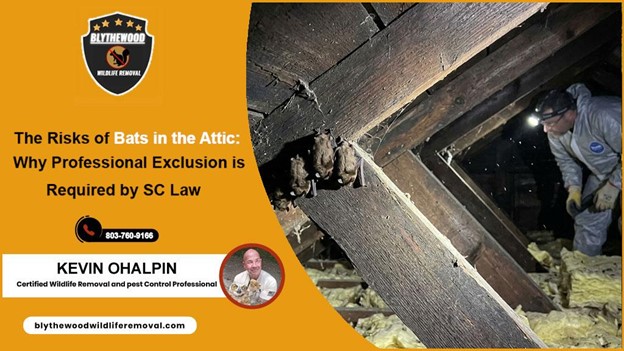
The Risks of Bats in the Attic: Why Professional Exclusion is Required by SC Law
May 22, 2026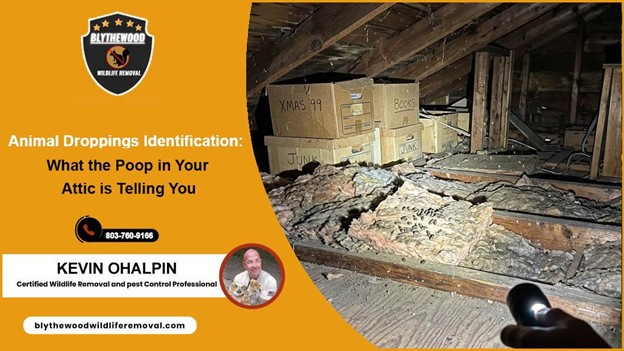
Finding droppings in the attic is usually one of the clearest signs that wildlife has already been inside your home. Many Columbia homeowners notice strange smells, scratching noises, or damaged insulation first, but droppings often confirm that animals are actively using the space.
Different animals leave different types of waste. The size, shape, location, and amount of droppings can help identify what kind of wildlife is living in the attic and how serious the problem may already be.
At Blythewood Wildlife Removal, attic inspections often begin after homeowners discover droppings near insulation, vents, or storage areas. Identifying the source quickly is important because animal waste can create odor issues, contamination problems, and even health risks if left untreated.
Why Animal Droppings Should Not Be Ignored
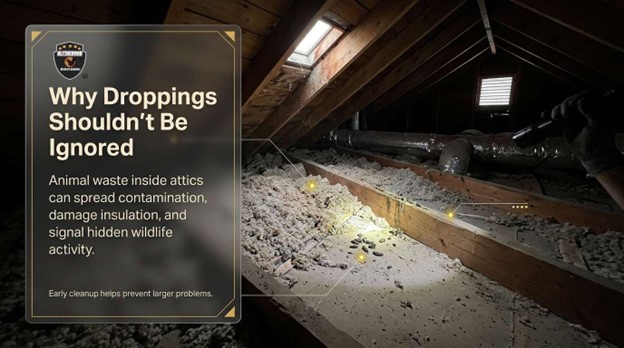
Wildlife droppings are more than just unpleasant. Over time, they can contaminate insulation, damage attic materials, attract insects, and affect indoor air quality.
In some cases, droppings may also carry bacteria or parasites. This becomes a bigger concern when animals remain inside the attic for long periods without detection.
Homes in Columbia, especially near wooded areas around Forest Acres and Rosewood, commonly deal with attic wildlife activity because nearby trees and roof access points make entry easier.
Rat and Mouse Droppings
Rodent droppings are one of the most common findings during attic inspections. Mouse droppings are usually small and dark with pointed ends. Rat droppings are larger and thicker. Both are commonly found along attic edges, insulation pathways, or near entry points.
If droppings continue appearing regularly, there is usually active rodent movement inside the attic.
This is often when homeowners begin searching for professional rodent removal services before wiring, insulation, or stored items become damaged.
Raccoon Droppings in the Attic
Raccoon droppings are much larger than rodent waste and are often found in concentrated areas called latrine sites. These droppings usually have a strong odor and may contain visible food debris.
Raccoons often remain in attics for extended periods, especially during colder months.
Common signs include:
- Large dark droppings
- Heavy attic odors
- Flattened insulation
- Noises at night
Because raccoons can cause structural damage along with contamination, professional raccoon removal is usually necessary once attic activity is confirmed.
Squirrel Droppings and Nesting Activity
Squirrel droppings are similar in shape to rat droppings but are often slightly larger and lighter in color as they age.
Homeowners usually find squirrel droppings near attic entry points, roof edges, or nesting areas where insulation has been disturbed.
Squirrels are active during the daytime, so homeowners often hear movement early in the morning or late afternoon before discovering droppings later.
Bat Droppings Near Attic Openings
Bat droppings, also called guano, are commonly found underneath attic rafters or near small roofline openings where bats enter and exit.
Bat droppings are usually dark, crumbly, and found in piles beneath roosting areas.
One major issue with bat guano is odor buildup and contamination over time. Large accumulations can also affect attic air quality.
This is why professional bat removal and cleanup services are important when bat activity is confirmed.
Bird Droppings Around Vents and Eaves
Bird nesting activity often leads to droppings around attic vents, roof edges, and eaves. Unlike rodent droppings, bird waste is lighter in color and more liquid in appearance. It may also build up around exterior vent covers or beneath nesting areas.
Homes near green spaces like Sesquicentennial State Park sometimes experience more bird nesting activity because of nearby tree coverage and wildlife movement.
Snake Droppings in Crawlspaces or Attics
Snake droppings are less common but can still appear in attics or crawlspaces where snakes seek warmth or shelter.
They are usually dark with a white chalky section caused by uric acid. Homeowners may also notice shed snake skin nearby.
Professional snake removal is recommended if there are signs of active snake presence inside the home.
Where Droppings Are Found Can Help Identify the Animal
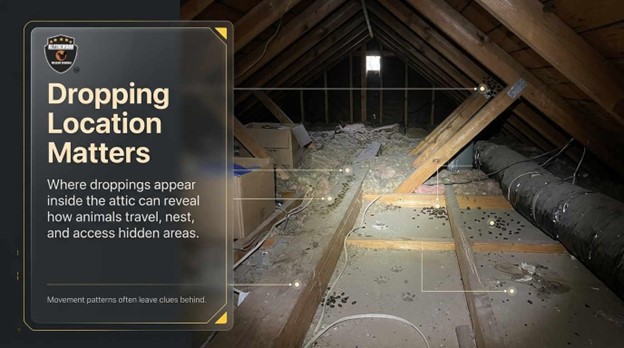
The location of droppings often tells as much as the droppings themselves.
| Location | Possible Wildlife |
| Along attic edges | Rodents |
| Near roof entry points | Squirrels or bats |
| Large concentrated areas | Raccoons |
| Around vents and eaves | Birds |
| Crawlspaces or basements | Opossums or snakes |
This is one reason professional attic inspections are helpful. Wildlife problems often involve more than one issue at the same time.
Why Cleanup Is Just as Important as Removal
Removing the animal is only part of solving the problem. Droppings, urine contamination, nesting material, and damaged insulation often remain after wildlife leaves. If cleanup is ignored, odors and contamination can continue affecting the home long afterward.
At Blythewood Wildlife Removal, attic cleanup and sanitation services help remove contaminated materials while reducing odor and bacteria buildup.
Wildlife Inspection and Removal in Columbia, SC
If you have found droppings in your attic, crawlspace, or garage, it is important to identify the source before the problem becomes worse. Different animals create different risks, and the longer wildlife remains inside the home, the more contamination and damage usually develop.
Blythewood Wildlife Removal provides trusted attic inspections, humane wildlife removal, cleanup services, and exclusion work throughout Columbia, SC. Our team handles rodent removal, raccoon removal, squirrel removal, bat removal, snake removal, and opossum removal for homeowners dealing with active wildlife problems.
Contact Blythewood Wildlife Removal
Business Name: Blythewood Wildlife Removal
Address: 1314 Lincoln St, Columbia, SC 29201
Phone: 803-760-9166
Email: [email protected]
Final Thoughts
Animal droppings in the attic are usually a sign that wildlife has already been active inside the home for some time. Identifying the type of droppings early can help determine what animal is involved and how serious the problem may be.
Quick inspection and cleanup are important because attic contamination tends to worsen the longer it is left untreated.
FAQs About Animal Droppings in Attics
How can I tell what animal is in my attic?
The size, shape, location, and amount of droppings can help identify whether the animal is a rodent, raccoon, squirrel, bat, bird, or another type of wildlife.
Are animal droppings dangerous?
Yes. Animal waste can carry bacteria, parasites, and strong odors that may affect indoor air quality and sanitation.
What do mouse droppings look like?
Mouse droppings are small, dark pellets with pointed ends and are often found near insulation or wall edges.
What is bat guano?
Bat guano is bat droppings that collect beneath roosting areas in attics. Large accumulations can create odor and contamination problems.
Should attic droppings be cleaned professionally?
Professional cleanup is recommended because wildlife waste may contain harmful bacteria or contamination that requires proper handling.
Can droppings remain after animals leave?
Yes. Even after wildlife leaves, droppings, nesting materials, and odors often remain unless cleanup and sanitation are completed.
Does Blythewood Wildlife Removal provide attic cleanup services?
Yes. Blythewood Wildlife Removal offers attic inspections, cleanup, sanitation, and wildlife removal services throughout Columbia, SC.
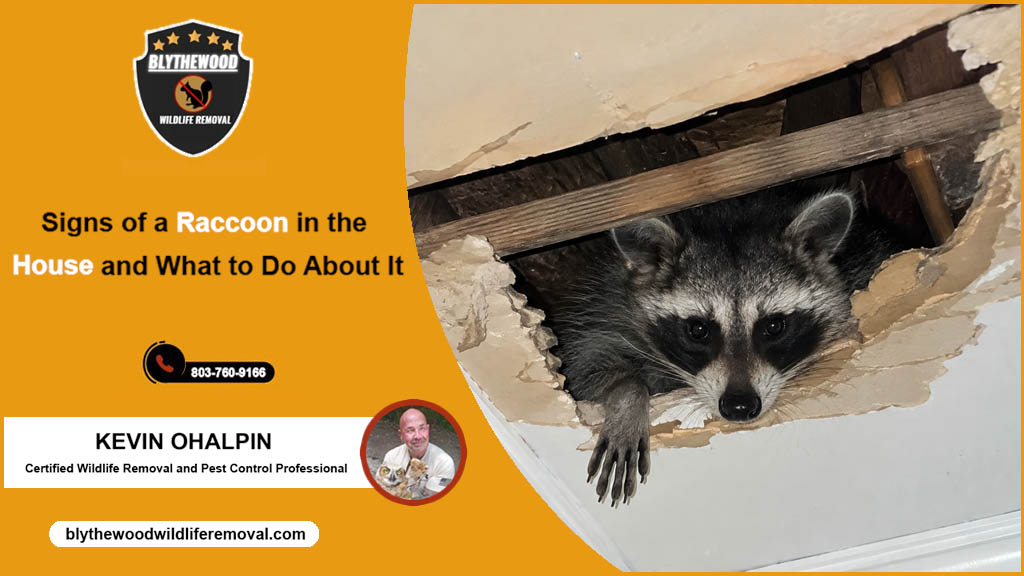
- Signs of a Raccoon in the House and What to Do About It - September 16, 2026
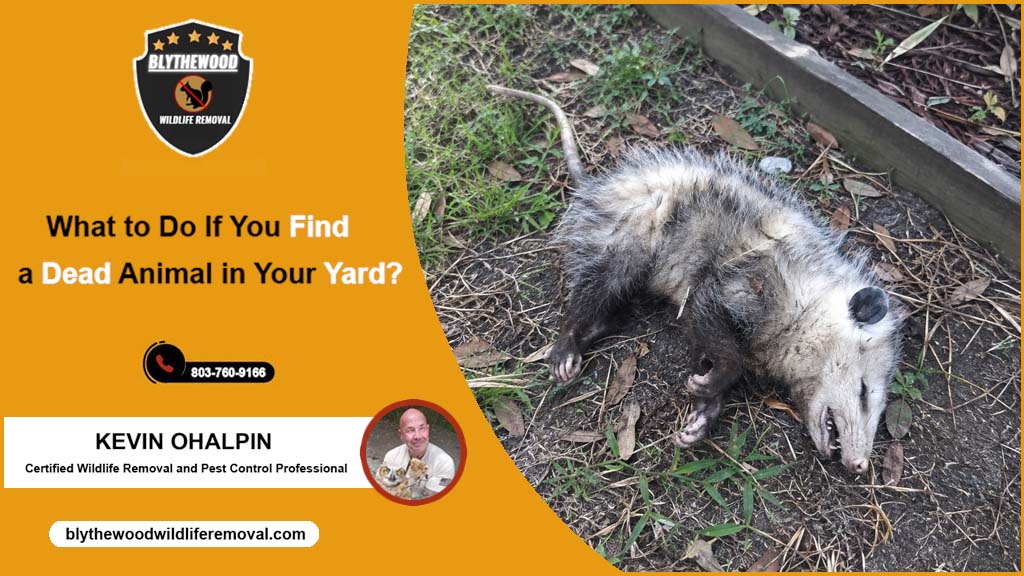
- What to Do If You Find a Dead Animal in Your Yard? - September 16, 2026
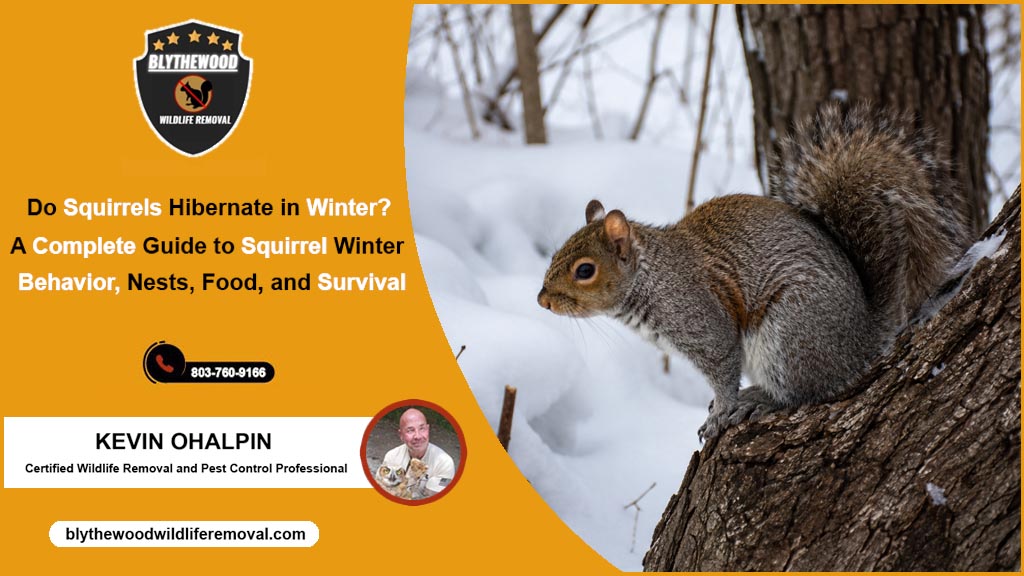
- Do Squirrels Hibernate in Winter? A Complete Guide to Squirrel Winter Behavior, Nests, Food, and Survival - September 16, 2026