
What Humane Wildlife Removal Actually Means and Why It Matters
June 24, 2026
What Do Raccoons Eat? A Real Look At Their Diet in South Carolina
July 27, 2026
If you want to know how to keep opossums out of your yard, the short answer is to remove their food source and block their shelter. That’s really what it comes down to.
But to do it right, it helps to understand a few basic things about opossums first, since they behave differently from raccoons or squirrels, even though people often mix them up.
What Is an Opossum?
An opossum is a marsupial, which means the female carries her young in a pouch. This makes the opossum the only marsupial found in North America. Baby opossums stay in the pouch for about two months, then ride on the mother’s back once they’re bigger.
Opossums have a long, hairless tail that helps them grip and balance. They have more teeth than any other land mammal in North America, around 50 of them. Their face is grayish white with a pointed nose, and their body is usually gray or brown.
People often confuse opossums with possums, but they are not the same animal. Possums live in Australia and have a furry tail. The animal in South Carolina yards is called a Virginia opossum, and it’s a completely different species.
Where Do Opossums Live?
Opossums do not build permanent homes. They move around often and use whatever shelter is available nearby. Common opossum habitats include hollow logs, brush piles, wood piles, and abandoned burrows dug by other animals.
Around houses, opossums will use the space under a porch, under a deck, inside a shed, or in a crawl space if there’s a gap large enough to fit through. They are solitary animals, so you’re usually dealing with one at a time, not a group.
Opossum Behavior and Lifespan
Opossums are nocturnal, so they are active at night and sleep during the day. This is why most sightings happen after dark.
Their lifespan in the wild is short, usually two to four years. To make up for this, opossums reproduce quickly and can have more than one litter per year.
Opossums are not aggressive. When they feel threatened, they may hiss and show their teeth, but this is mostly a bluff. Their real defense is playing dead. An opossum can go completely limp and stay still for several minutes or hours if it feels it’s in danger. This is where the phrase “playing possum” comes from. However, you must be careful and not to touch or approach it. It can bite!
What Do Opossums Eat?
Opossums eat a wide range of food, which is part of why they end up in yards so often. Their diet includes insects, slugs, snails, small rodents, eggs, fruit, and pet food left outside. They will also eat from an open trash can if given the chance.
One thing worth knowing is that opossums eat a large number of ticks. This actually makes them useful to have around in small numbers, since they help lower the tick population near your home.
Why Are Opossums Coming Into Your Yard?
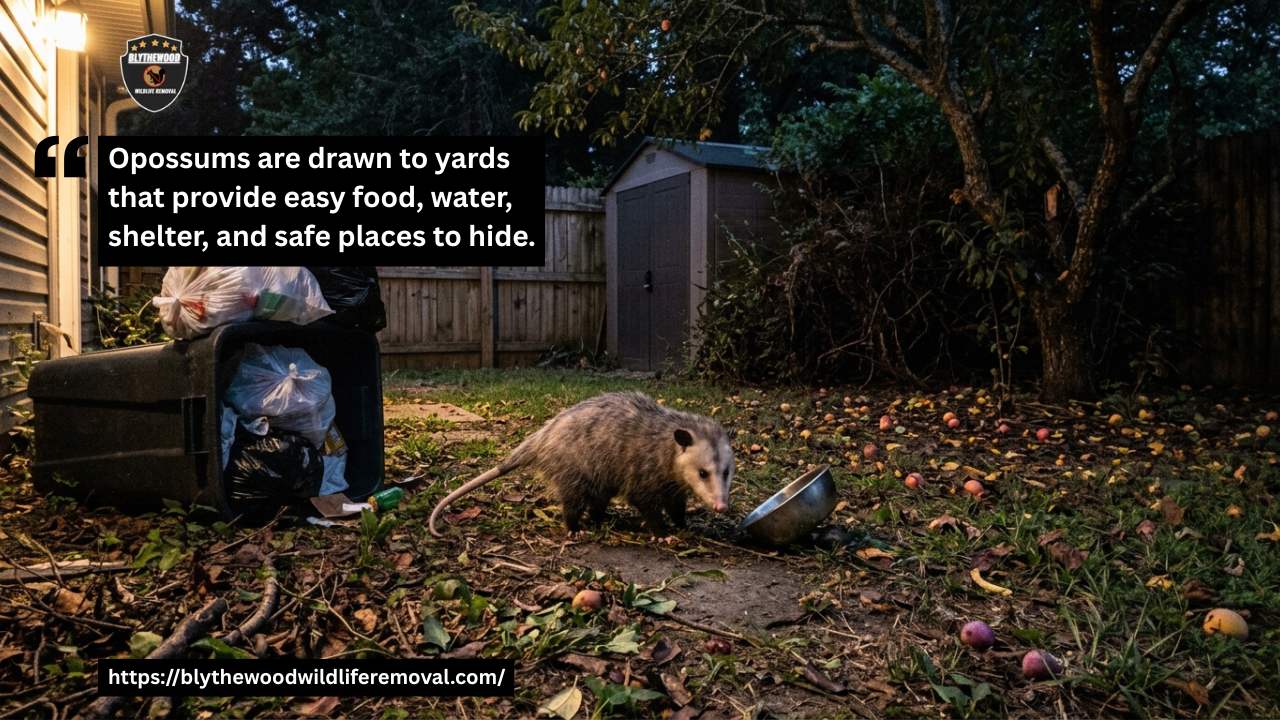
Opossums are drawn to yards that offer easy food and a quiet place to hide. The most common reasons an opossum shows up include.
Pet food or water bowls left outside overnight. Trash cans without a secure lid. Fallen fruit left under trees. Compost piles that are not covered. Gaps under decks, porches, or sheds.
If your yard has one or more of these, it becomes an easy target compared to a yard that doesn’t.
Signs You Have an Opossum in Your Yard
A few signs point to opossum activity. These include:
- Knocked over trash cans
- Scattered pet food
- Tracks near soft dirt or mulch
- Musty smell coming from under a deck or porch
You may also hear soft movement at night near crawl space vents, which is one of the same warning signs we look for during attic wildlife inspections across the Midlands.
Are Opossums Dangerous to Have Around?
Opossums are not usually a threat to people, but they can still carry health risks. They may carry fleas, ticks, and mites. They are also more resistant to rabies than most mammals because of their lower body temperature, but they can still spread other diseases through bites, scratches, or contact with droppings.
Pets are more likely to be at risk than people, since a dog or cat may try to corner or attack an opossum, and the opossum will defend itself if it can’t escape.
Can Opossums Damage Your Property?
Opossums cause less damage than raccoons, but they can still be a problem. They may dig through mulch or garden beds while looking for grubs and insects. They can also get into chicken coops if the coop isn’t fully secured, including the bottom.
If an opossum dens under a porch or deck for a while, you may notice droppings and a bad smell building up in that spot, similar to what we see with raccoons that move into a similar space once they find easy shelter.
How to Keep Opossums Out of Your Yard
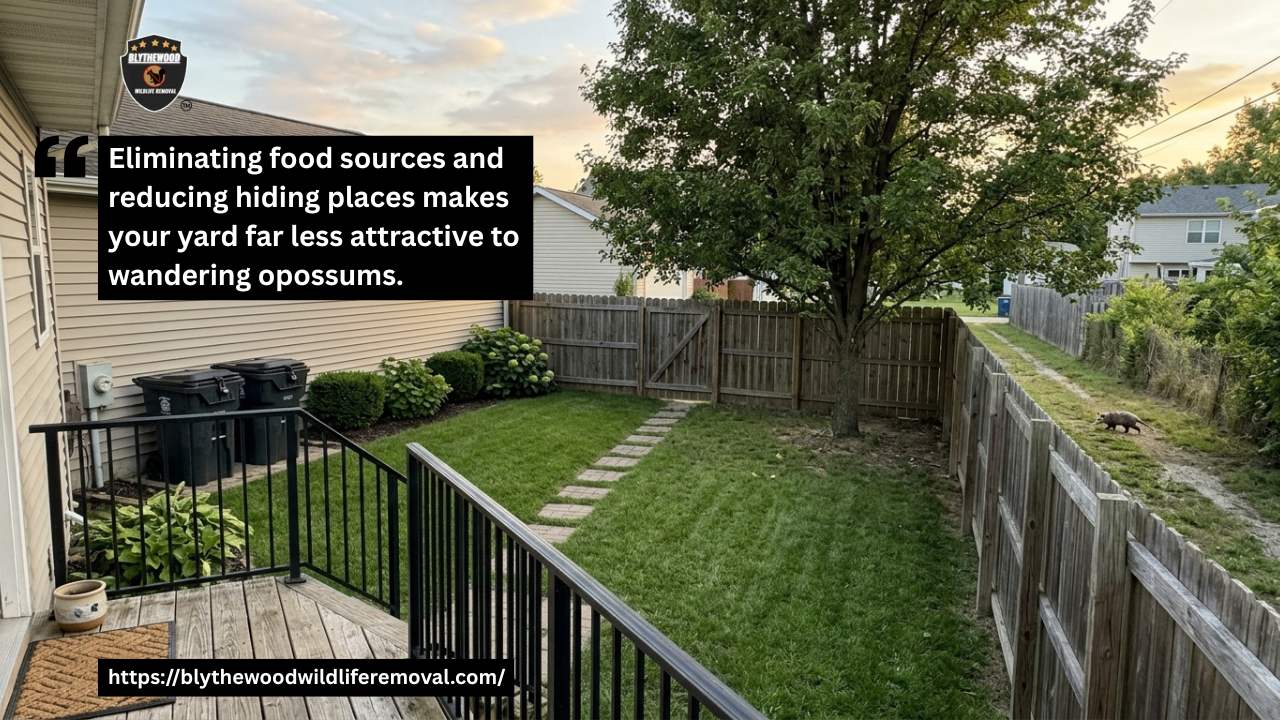
Keeping opossums away comes down to a few practical steps. Here’s how to work through them.
Remove Easy Food Sources
Bring pet food and water bowls inside at night instead of leaving them out. Use trash cans with locking lids, or store cans inside a garage or shed until pickup day. Pick up fallen fruit from the yard regularly instead of letting it sit on the ground. Keep compost bins covered with a lid that the opossum can’t lift or pry open.
Block Off Shelter and Denning Spots
Opossums look for the same tight, dark spaces that other wildlife use, including gaps under decks, holes in shed skirting, and openings into crawl spaces. Sealing these entry points with hardware cloth or solid material removes their shelter option completely. If you keep chickens, make sure the coop is fully enclosed, including the bottom, since opossums can dig underneath fencing that isn’t buried deep enough.
Add a Few Simple Deterrents
Motion-activated lights or sprinklers near common entry points can discourage nighttime visits, since opossums prefer to move around without being noticed. Trimming back brush piles and thick ground cover near the house also removes daytime hiding spots close to your home.
Why Handling an Opossum Yourself Can Be Risky
Even though opossums aren’t naturally aggressive, cornering one, trying to trap it yourself, or removing one that’s already denned under your home can go wrong fast. A trapped or scared opossum will bite if it feels it has no way out, and improper trapping can also violate state wildlife regulations depending on the method used.
There’s also the exposure risk from droppings and parasites if the den site isn’t handled and cleaned properly. This is really where professional opossum removal makes more sense than a DIY approach, especially once an opossum has settled into a spot on your property.
What to Do If an Opossum Has Already Moved In
If an opossum is already living under your porch, deck, or in a crawl space, prevention steps alone won’t remove it. Signs of this include ongoing movement at night, droppings near a vent, or a smell that doesn’t go away. In some cases, opossums move further into a home and end up in the attic, which overlaps with a lot of the other wildlife calls we get across Columbia and Lexington.
Get Help From Blythewood Wildlife Removal
We’ve handled opossum removal across South Carolina for over 15 years. Most homeowners who call us have already tried some prevention steps on their own, which is normal. Opossums can be persistent if there’s still an easy food source nearby.
If you have an opossum that won’t leave, one denning under your deck, or unexplained noises at night, call us at 1-803-760-9166. We provide full inspections, humane trapping, and exclusion work so the problem doesn’t come back. We’re veteran-owned, available 24/7, and we serve homeowners across the Midlands.
Whether it’s a single opossum passing through or a larger wildlife issue, reach out to our team, and we can help you handle it properly the first time.
- Signs of a Raccoon in the House and What to Do About It - September 16, 2026
- What to Do If You Find a Dead Animal in Your Yard? - September 16, 2026
- Do Squirrels Hibernate in Winter? A Complete Guide to Squirrel Winter Behavior, Nests, Food, and Survival - September 16, 2026