How to Tell if Bats Are Living in Your Attic in South Carolina
December 24, 2025
DIY Wildlife Prevention Tips for South Carolina Homes
April 8, 2026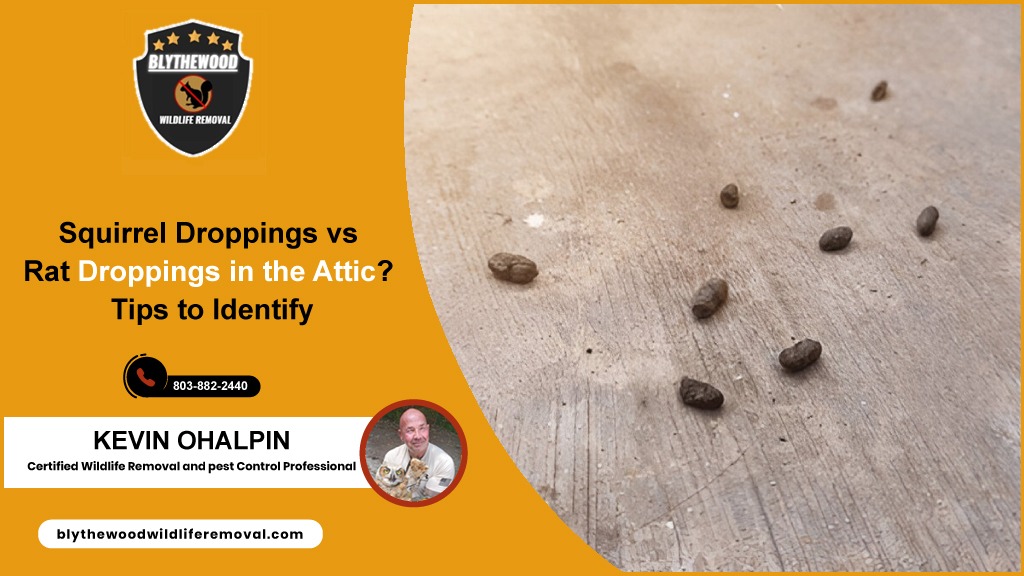
Finding droppings in your attic is never a good sign, but knowing whether they belong to squirrels or rats can make a big difference in how the problem is handled. In South Carolina, both animals are common attic invaders, and both can cause significant damage if left unchecked. However, they behave differently, carry different risks, and require slightly different removal and prevention strategies. We’ve inspected countless homes where the first clue was simply the type of droppings found scattered in insulation or along attic beams.
Correct identification is essential not only for removal but also for understanding the scope of the infestation. Squirrels are often seasonal intruders, entering primarily in winter or during nesting periods, while rats tend to settle in and reproduce year-round. Misidentifying the culprit could lead to wasted time, ineffective traps, or ongoing damage.
Health Risks Associated With Animal Droppings
Whether you are dealing with squirrels or rats, droppings pose a health hazard. Rat feces are known carriers of diseases such as leptospirosis, Salmonella, and hantavirus, which can be contracted through direct contact or inhalation of airborne particles. Squirrel droppings can also carry bacteria and parasites, though disease transmission is less common. Regardless of the species, the presence of feces and urine in an attic can contaminate insulation, create persistent odors, and attract other pests like insects.
This is why handling droppings requires proper safety precautions, including masks, gloves, and professional cleaning. Our team at Blythewood Wildlife Removal not only identifies the source but also provides safe cleanup and attic restoration to remove contamination and odor.
Physical Differences Between Squirrel and Rat Droppings
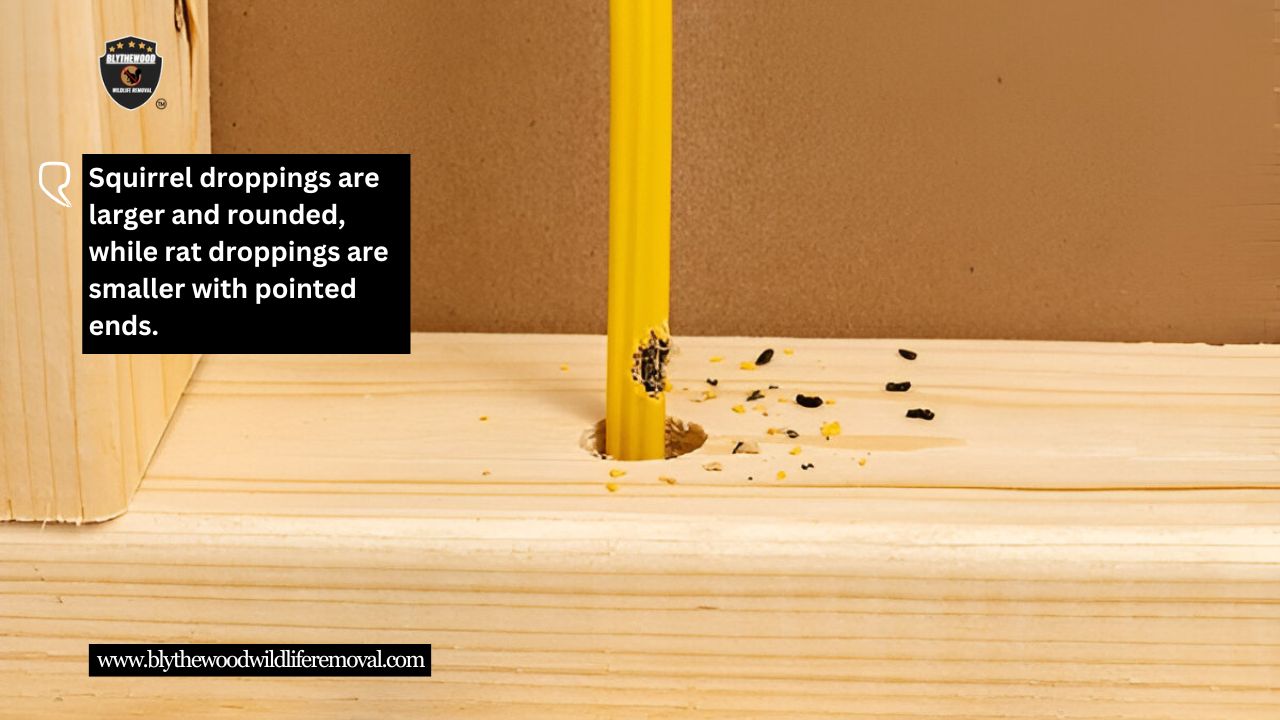
While both types of droppings are small and dark, they have distinct shapes and sizes. Squirrel droppings are generally slightly larger, about the size of a grain of rice or slightly longer, with rounded edges. They tend to have a slightly lighter brown color when fresh, darkening over time. In many cases, squirrel droppings are more uniform in size and shape because their diet is more consistent.
Rat droppings, on the other hand, are typically smaller, about half an inch in length, with pointed ends that resemble tiny spindles. They are often darker in color, even when fresh, and can be softer in texture initially. Rats also tend to leave droppings in concentrated areas along their runways, which are the paths they repeatedly travel between food and nesting spots.
Patterns of Dropping Locations
Another way to tell the difference is by looking at where the droppings are found. Squirrels are more active during the day and may leave droppings scattered throughout the attic, especially near entry points or nesting sites. You might also see them on roof rafters, in corners, or near chewed insulation.
Rats are nocturnal and more discreet in their habits. They often leave droppings in hidden areas such as behind stored boxes, along wall edges, or inside insulation tunnels they’ve created. If you see droppings paired with gnaw marks on wood or wiring, there’s a strong chance you’re dealing with rats.
Sounds and Activity That Can Help You Identify the Animal
Droppings alone can sometimes be misleading, so pairing visual evidence with sound can help confirm the species. Squirrels are diurnal, so scratching, scampering, and rolling sounds will mostly occur during the day. You may also hear them chewing wood or nuts and occasionally thumping as they jump between beams.
Rats are much quieter and more active at night. Their noises tend to be soft scurrying or gnawing sounds after sunset and in the early morning hours. If you’re only hearing activity at night, rats are more likely the culprit.
Why Professional Identification Matters?
While online guides and photos can help you make an educated guess, nothing replaces a professional inspection. Misidentifying squirrel droppings as rat droppings (or vice versa) can lead to wasted time, wrong trapping methods, and incomplete exclusion work. Our team at Blythewood Wildlife Removal performs detailed inspections that include looking for chew marks, nesting materials, entry point size and location, and any other indicators of the specific species.
We also understand that droppings are just the symptom; the real problem is the animal causing them. Once we identify the source, we move quickly to remove the intruders and seal every possible entry point to prevent them from coming back. We offer effective and humane squirrel removal services.
Cleaning and Decontaminating After Wildlife Removal
Droppings, urine, and nesting materials can cause long-term issues if not properly cleaned. Simply removing the animals and leaving contaminated insulation in place can allow bacteria, parasites, and odors to linger. Our attic restoration services include removing all soiled insulation, disinfecting the area with specialized solutions, and replacing it with fresh, pest-free insulation. This ensures your attic is not only wildlife-free but also safe for you and your family.
How Blythewood Wildlife Removal Can Help
At Blythewood Wildlife Removal, we’ve helped countless South Carolina homeowners solve their attic mysteries by identifying exactly which animal is causing the problem. Whether it’s squirrels, rats, or another species entirely, our process is thorough, humane, and designed to keep your home safe for the long term. From initial inspection to wildlife removal, cleanup, and prevention, we handle every step so you don’t have to worry about repeat issues.
If you’ve found droppings in your attic and aren’t sure what animal is responsible, don’t guess; call us today at 1-803-760-9166. We’ll identify the problem, remove the intruders, and restore your attic so you can enjoy a clean, quiet, and healthy home.
- Signs of a Raccoon in the House and What to Do About It - September 16, 2026
- What to Do If You Find a Dead Animal in Your Yard? - September 16, 2026
- Do Squirrels Hibernate in Winter? A Complete Guide to Squirrel Winter Behavior, Nests, Food, and Survival - September 16, 2026