
Do Armadillos Hibernate in Winter? A Complete Guide to Their Winer Behavior and Survival
September 16, 2026
What to Do If You Find a Dead Animal in Your Yard?
September 16, 2026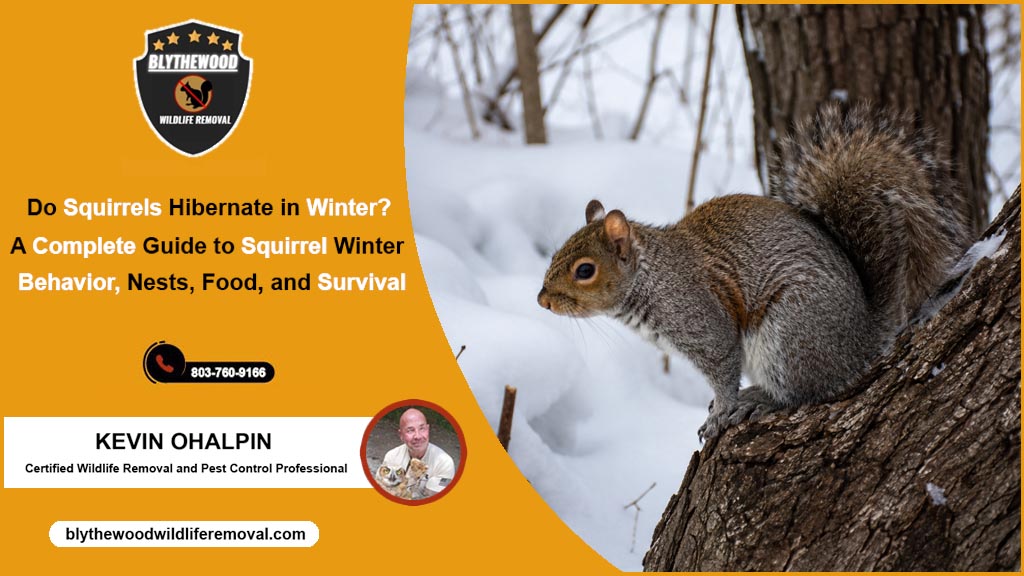
Do squirrels hibernate in winter? No, most squirrels do not hibernate. Tree squirrels, including grey squirrels, red squirrels, black squirrels, fox squirrels, and flying squirrels, stay active all winter long. The only true hibernators in the squirrel family are certain ground squirrel species, which dig underground burrows and drop into a deep, extended sleep for months at a time.
This is one of the most common wildlife mix-ups people run into. Squirrel hibernation gets confused with squirrel dormancy, and the two are not the same thing. Below is a full breakdown of what squirrels actually do during winter, where they sleep, what they eat, how they handle snow and cold, and when they have babies.
Which Squirrels Actually Hibernate?
Most of the squirrel species do not hibernate. Only ground squirrels are true hibernators. Every tree-dwelling squirrel species stays awake and active through winter.
Ground squirrels, such as the thirteen-lined ground squirrel and the golden-mantled ground squirrel, spend the warmer months eating heavily to build up fat reserves. Once temperatures drop in fall, they retreat into underground burrows and enter true hibernation, sometimes for five to eight months depending on the region and species.
Eastern grey squirrels, red squirrels, black squirrels, fox squirrels, and flying squirrels are also among the species that do not hibernate.
So when someone asks “does a squirrel hibernate,” the honest answer depends entirely on which squirrel they mean. Ground squirrel hibernation is real and well documented. Tree squirrel hibernation is not.
Why Don’t Squirrels Hibernate?
Tree squirrels don’t hibernate because their survival strategy is built around food caching, not fat storage or extended sleep.
Hibernation works for animals that can build up enough body fat to survive months without eating. Tree squirrels take a different approach. Instead of relying on stored fat, they store food in the environment around them, burying thousands of nuts and seeds throughout the fall so they have something to dig up all winter. This strategy requires the animal to stay awake, alert, and mobile, which is the opposite of what hibernation demands.
There’s also a body size and metabolism factor. True hibernators tend to have metabolic and physiological adaptations, like the ability to dramatically lower body temperature and heart rate for weeks at a stretch, that most tree squirrel species simply never evolved.
How Long Do Squirrels Hibernate, and At What Temperature?
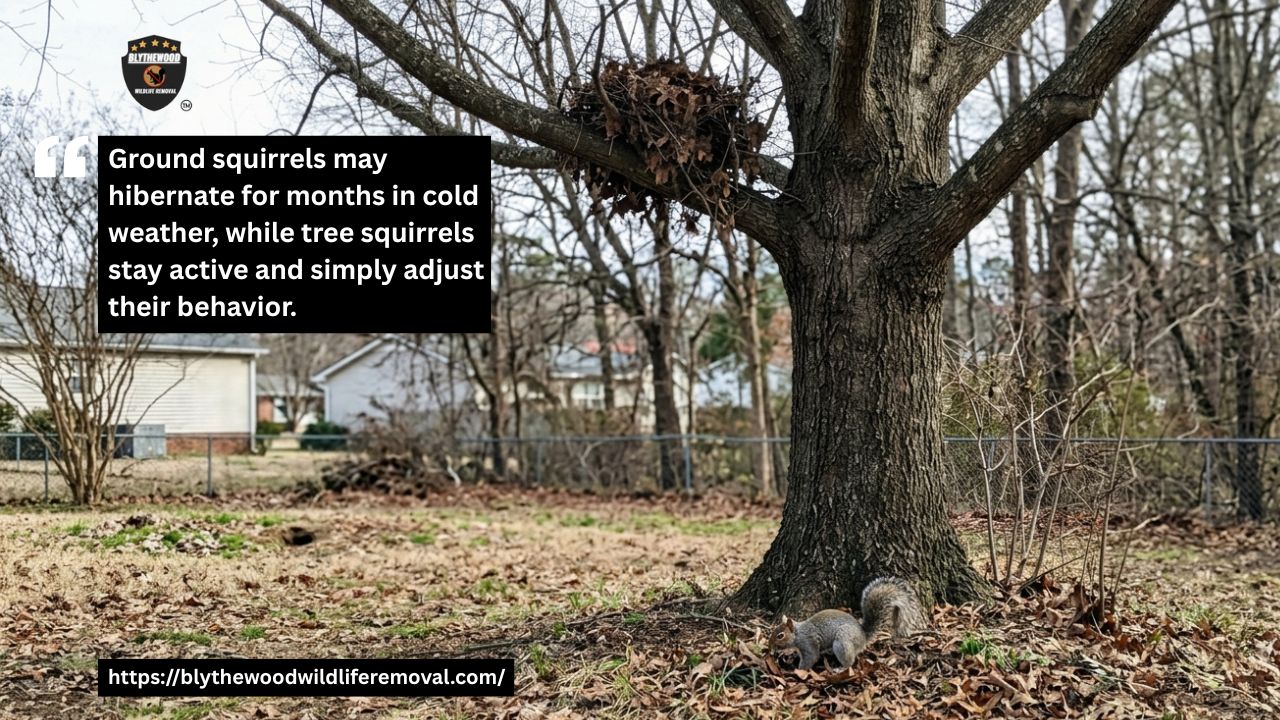
Ground squirrels that hibernate typically stay dormant for four to eight months, depending on species, latitude, and elevation. Some western ground squirrel species begin hibernating as early as August and don’t emerge until March or April.
Ground squirrel hibernation is usually triggered once soil and burrow temperatures fall into a specific range, generally once ambient temperatures drop below roughly 50°F (10°C) on a sustained basis, combined with shortening daylight hours. During hibernation, a ground squirrel’s body temperature can fall close to freezing, and its heart rate can drop from several hundred beats per minute to just a handful.
Tree squirrels never enter this state. There’s no hibernation temperature that triggers dormancy in grey, red, fox, black, or flying squirrels, because they don’t have a hibernation trigger at all. What changes for them in cold weather is activity level and timing, not consciousness.
Where Do Squirrels Go in the Winter?
Tree squirrels shelter in nests called dreys or in tree cavities, while ground squirrels retreat into underground burrows for hibernation.
Where do squirrels sleep in winter, and do squirrels sleep in trees, are two of the most searched questions on this topic, and the answer covers both types of shelter tree squirrels use:
- Tree cavities: Hollowed-out sections of mature trees are the preferred winter shelter for grey, fox, and red squirrels because they offer the best insulation from wind and cold.
- Dreys: When cavities aren’t available, squirrels build leaf nests high in tree branches, tightly woven from twigs, leaves, and bark, then lined with softer material like moss, grass, or shredded bark for insulation.
- Multiple nests: Most tree squirrels maintain several dreys and cavities across their territory and rotate between them, partly to avoid parasites and partly as a backup if one shelter is damaged or a predator finds it.
Where do squirrels nest in winter often has a simple answer: as high as possible, in whichever tree cavity offers the best wind protection, usually somewhere between 20 and 60 feet up. Flying squirrels are the exception that leans hardest on shared shelter, frequently nesting in groups inside a single cavity to conserve warmth.
Ground squirrels, by contrast, dig extensive burrow systems below the frost line, sometimes several feet deep, where they seal themselves in with soil or vegetation for the duration of hibernation.
How Do Squirrels Survive Winter and Stay Warm?
Squirrels survive winter through a combination of thick winter fur, insulated shelters, cached food, and reduced activity on the coldest days.
A squirrel’s coat gets noticeably thicker and denser heading into winter, which is the animal’s main built-in defense against cold. On top of that physical adaptation, several behavioral habits help them stay warm:
- Tail wrapping: Squirrels wrap their bushy tail around their body like a blanket while resting, which helps trap body heat.
- Curling into a tight ball: This reduces the amount of exposed body surface losing heat to the air.
- Group nesting: Especially common in flying squirrels and sometimes grey squirrels, several individuals will share one den during extreme cold.
- Staying inside during storms: Squirrels will hole up in a nest or cavity for a day or two during a severe cold snap or blizzard rather than forage.
Squirrels can freeze to death, particularly young squirrels, sick individuals, or animals caught outside their shelter during an unexpected temperature drop. However, healthy adult squirrels with access to a solid nest and stored food rarely freeze to death, since their fur and shelter combination is generally sufficient down to well below freezing.
Squirrels will eat snow as a water source in winter when other water sources like streams and puddles are frozen solid. It’s a normal and harmless behavior, not a sign of distress.
What Do Squirrels Eat in Winter, and How Much Do They Store?
Squirrels rely on cached nuts, seeds, and buried food stores through winter, supplementing with tree bark, buds, and any food source they can find above ground. Squirrels hate strong-smelling foods like garlic, onions, hot peppers, and certain bitter or spicy flavors.
Squirrels store food for winter extensively. This is called scatter hoarding. Rather than keeping all their food in one place, squirrels bury individual nuts and seeds across dozens or even hundreds of separate locations throughout their territory.
A single grey squirrel can bury several thousand nuts in a single season, sometimes estimated between 3,000 and 10,000 depending on food availability and the individual squirrel. They rely heavily on scent memory and spatial memory to relocate a portion of these caches later, though a significant percentage are never recovered, which is actually one of the ways squirrels contribute to new tree growth.
Most tree squirrels do put on some extra body fat heading into fall, but nowhere near the level a true hibernator needs, since they’re still relying on cached food rather than stored fat to get through winter.
Beyond cached nuts, a winter diet also includes:
- Bark and twigs from certain tree species when other food is scarce
- Buds and dormant plant shoots
- Any leftover fruit, seeds, or fungi still available
- Bird feeder seed and suet, which is why squirrels are frequently seen around backyard feeders in winter
If you want to supplement their diet safely, it generally comes down to raw unsalted nuts (walnuts, almonds, pecans), sunflower seeds, and small amounts of fresh vegetables. They can eat small amounts of plain cheese without harm, but it isn’t a natural or particularly beneficial food source and shouldn’t make up a regular part of what’s offered to wild squirrels.
Do Squirrels Migrate?
No, squirrels do not migrate. Tree squirrels are territorial animals that stay within the same general home range year-round, typically less than a few acres for most individual squirrels, and winter is no exception. Rather than relocating somewhere warmer, they rely on shelter, fur, and food caches within their existing territory to get through the season.
Squirrel Reproduction: Do Squirrels Have Babies in Winter?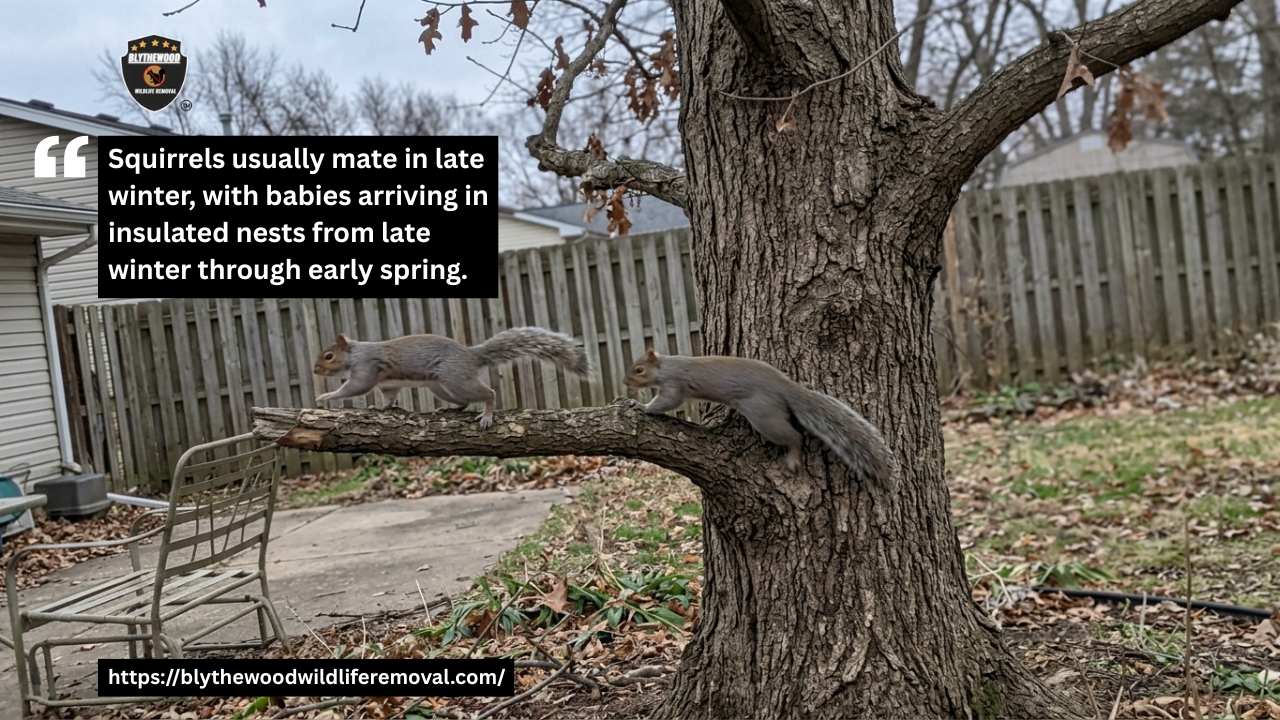
Squirrels typically mate in late winter, which means babies are usually born in very early spring, not during the coldest part of winter itself.
What time of year do squirrels have babies is a two-part answer for most tree squirrel species, since grey squirrels and similar species often have two breeding seasons per year:
- Late winter mating (roughly December through February) leads to a litter arriving in late winter to early spring (February through April)
- A second mating period in early summer leads to a second litter in late summer (June through August)
Squirrels mate in winter. The first of two annual mating seasons for most tree squirrels falls in late winter, which is also when increased chasing behavior and vocalization between squirrels becomes more noticeable outdoors. A typical litter is two to four young, born blind and hairless in an insulated drey or tree cavity, where they stay for roughly eight to ten weeks before venturing out.
Best Time of Year for Squirrel Removal
Late fall through early winter is generally considered the best time for squirrel removal work, before the late winter mating and birthing season begins.
Once squirrels start entering the first mating period and preparing dens for a litter, removal becomes more complicated, since a nest may contain dependent young that can’t survive without their mother. Squirrels are also at their most active around attics, soffits, and chimneys in fall as they search for winter shelter, which is exactly why this time of year sees the highest volume of squirrel-in-the-house calls. Winter squirrel activity indoors is almost always driven by a search for a warm, dry nesting spot rather than anything unusual about the individual animal.
Wrapping Up
Most squirrels do not hibernate. Tree squirrels, including grey, red, black, fox, and flying squirrels, stay active through winter, relying on thick fur, insulated nests, and cached food rather than a dormant sleep state. True squirrel hibernation is limited to certain ground squirrel species, which drop into a deep, months-long hibernation underground. Understanding this difference clears up most of the confusion around what squirrels actually do once the temperature drops.
FAQs
Do squirrels hibernate in winter?
No, tree squirrels stay active all winter. Only certain ground squirrel species are true hibernators.
Where do squirrels hibernate?
Ground squirrels that hibernate do so in underground burrows dug below the frost line. Tree squirrels don’t hibernate at all, so this doesn’t apply to them.
How long do squirrels live indoors if one gets into a house?
A squirrel that gets into an attic or wall space can survive there for weeks if it has access to food and water, though most either find their way back out or need to be professionally removed, since indoor spaces don’t offer the natural food sources squirrels rely on long-term.
Do squirrels come out in winter even during a cold snap?
Only briefly. Squirrels will limit outdoor activity to short foraging windows during extreme cold and spend the rest of the time in their nest or cavity.
Is it true squirrels never wake up during hibernation?
No, this applies only to true hibernators like some ground squirrel species, and even then, hibernation isn’t one continuous sleep. Ground squirrels cycle through periods of deep torpor broken up by brief warming and waking periods throughout the hibernation season.
- Signs of a Raccoon in the House and What to Do About It - September 16, 2026
- What to Do If You Find a Dead Animal in Your Yard? - September 16, 2026
- Do Squirrels Hibernate in Winter? A Complete Guide to Squirrel Winter Behavior, Nests, Food, and Survival - September 16, 2026