
What to Do If You Find a Dead Animal in Your Yard?
September 16, 2026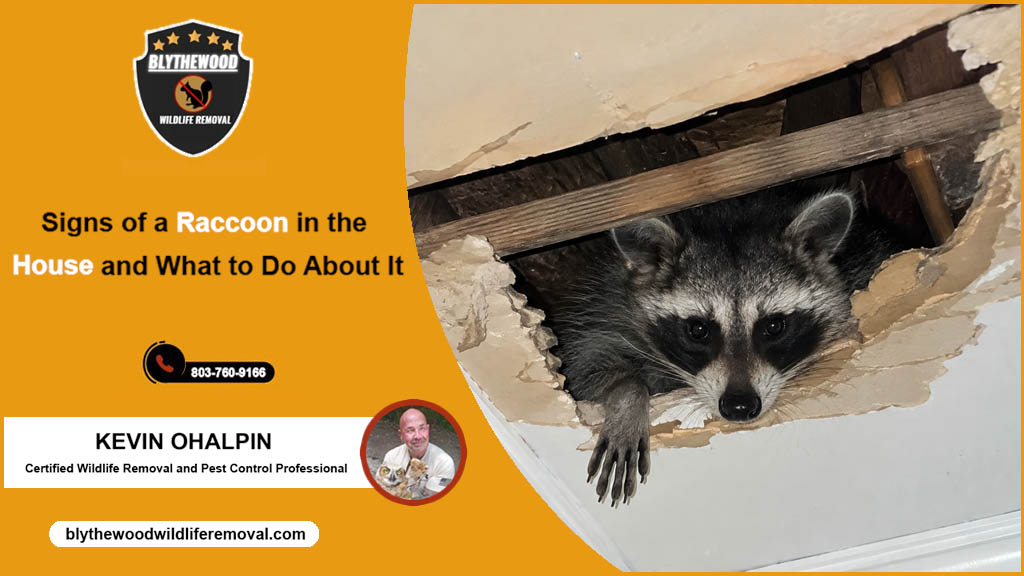
I’ve been pulling raccoons out of attics, chimneys, and crawl spaces around the Midlands for over 15 years now, and most homeowners go through the same thing before they call me. They hear something, they’re not sure what it is, and by the time they figure out it’s a raccoon, the animal has usually been living up there for weeks already. So I wanted to lay out the real signs to look for, based on what I actually see on jobs, not just a generic checklist.
Scratching and Thumping Noises Overhead
This is almost always the first thing people notice. Raccoons are big animals compared to squirrels or rats, so they don’t sound like light scurrying. You’ll typically hear heavier thumping, dragging, or scratching, and it tends to happen in the evening or overnight since raccoons are most active after dark.
If the noise seems to move around a fairly wide section of the attic rather than staying in one spot, that’s consistent with a raccoon patrolling its den space. I’ve written more about what different attic sounds usually mean in this piece on noises in your attic at night, which walks through how to tell a raccoon apart from squirrels or rats just by the sound pattern.
Raccoon Droppings
Raccoon droppings are one of the clearest signs I look for on an inspection. They’re tubular, usually a couple inches long, dark, and often show bits of undigested food like seeds or berries. Raccoons also tend to use the same spot repeatedly as a latrine, so if you find a cluster of droppings in one area of the attic or near an entry point, that’s a strong indicator you’re dealing with a raccoon rather than something smaller.
I don’t recommend cleaning this up yourself. Raccoon droppings can carry roundworm and other parasites, and disturbing them without the right protective gear isn’t worth the risk.
Damaged Vents, Soffits, and Rooflines
Raccoons are strong and surprisingly good at prying things open. I regularly find torn roof vents, bent flashing, and soffit panels that have been pulled loose or chewed at the edges. Once a raccoon finds a weak point, it will keep working at it until the opening is big enough to fit through, and a full-grown raccoon doesn’t need much more than a four-inch gap to squeeze in.
If you walk your roofline and notice any bent vent covers, gaps around the fascia, or claw marks near the eaves, that’s usually where the entry point is. This is exactly the kind of weak spot I go over in detail in this post on sealing entry points, since the same vulnerable areas that let raccoons in also let squirrels and bats in.
A Strong, Musky Smell
Raccoons don’t keep a clean den. Between the droppings, urine, and the animal itself, a raccoon that’s been in an attic for a while usually leaves behind a noticeable musky odor.
Homeowners sometimes describe it as similar to a wet dog smell, but stronger and more persistent, and it tends to get worse in warmer weather. If you’re catching a smell like that from your attic hatch or through vents, that’s often a sign the animal has been settled in for longer than a day or two.
Torn Insulation and Nesting Material
Female raccoons in particular will tear up insulation to build a nesting area, especially in late winter and early spring when they’re getting ready to have young. If you go up into the attic and see insulation that’s flattened, pulled into a pile, or mixed with leaves and debris the raccoon dragged in from outside, that’s a den site, not random damage.
This is also the point where I tell homeowners to be careful about timing removal, since a den with babies in it needs to be handled differently than an empty one.
Daytime Activity From a Usually Nocturnal Animal
Raccoons are nocturnal, so seeing one out and moving around during the day isn’t automatically a red flag, but it’s worth paying attention to, especially if it’s happening at your house repeatedly. A mother raccoon foraging a bit longer to feed her young is common and not a health concern by itself. What I do want homeowners to watch for is a raccoon that seems disoriented, is stumbling, or shows no fear of people or pets at all, since that combination is a different situation entirely and worth calling about right away.
Grease Marks and Rub Trails
Raccoons travel the same paths repeatedly, and the natural oils in their fur leave dark grease marks along entry points, roof edges, and the sides of vents they squeeze through often. If you notice a dark smudge building up around a gap in your soffit or roofline, that’s usually a sign the same animal has been using that spot as its regular way in and out for a while.
What to Do If You Suspect a Raccoon Is in Your House
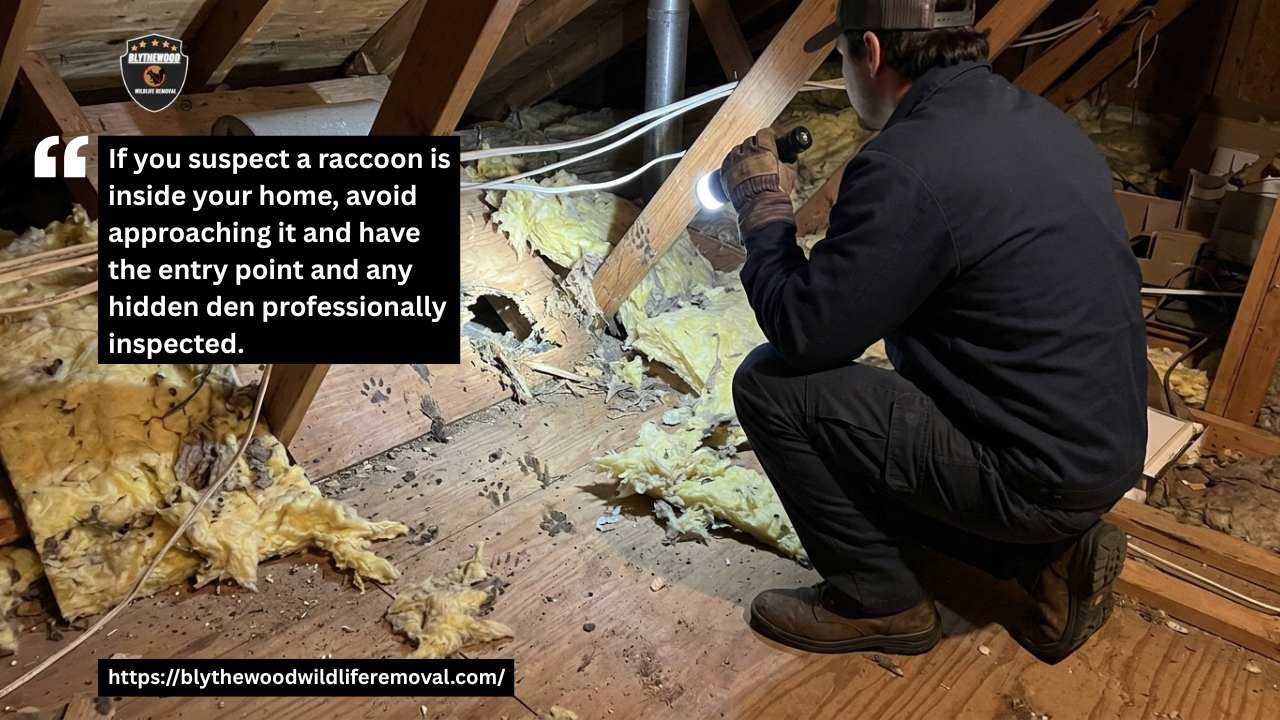
If you’re seeing more than one of these signs, don’t try to handle it yourself. Raccoons can be aggressive when they feel cornered, especially a mother protecting young, and they’re a common carrier of rabies in South Carolina.
I always start with a full inspection to confirm the entry point, figure out whether there’s a den with young present, and put together a plan for safe removal along with sealing the entry points so the problem doesn’t just repeat itself with the next animal that finds the same gap. You can see how we approach raccoon removal if you want a better idea of the process before calling.
Why Raccoons Get Into Homes in the First Place
Most of the raccoon calls I get come down to the same thing. A home offers shelter, warmth, and safety from predators, and an attic checks every box. It’s especially common heading into fall as raccoons look for a den ahead of winter, and again in late winter when a female is close to giving birth. Neighborhoods near wooded areas or waterways around our Columbia, SC service area see this more often, just because there’s a bigger raccoon population nearby to begin with.
Get in Touch
If you’re hearing noises overhead or found droppings in your attic, don’t wait on it. The longer a raccoon stays, the more damage and mess you’re dealing with by the time it’s removed. We serve homeowners throughout Columbia, SC, and the surrounding Midlands, along with folks over in Lexington, SC, and we’re available for same-day inspections when scheduling allows.
Blythewood Wildlife Removal (Available 24 hours)
Call or text: 1-803-760-9166
Email: [email protected]
Lexington: 122 Woodcraft Dr, Lexington, SC 29073
Columbia: 1314 Lincoln St, Columbia, SC 29201
- Signs of a Raccoon in the House and What to Do About It - September 16, 2026
- What to Do If You Find a Dead Animal in Your Yard? - September 16, 2026
- Do Squirrels Hibernate in Winter? A Complete Guide to Squirrel Winter Behavior, Nests, Food, and Survival - September 16, 2026